
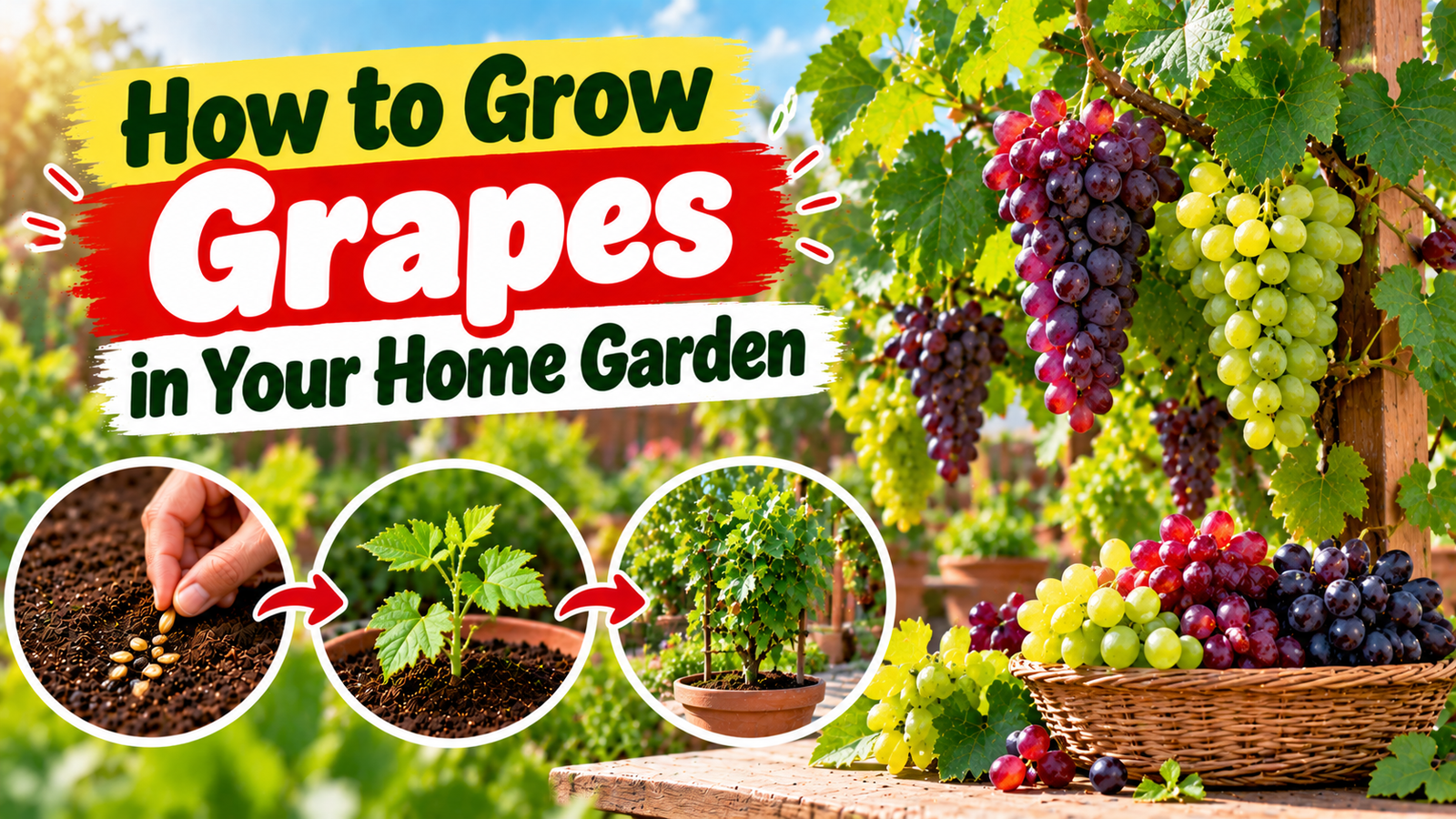
Growing grapes in your home garden can be a rewarding experience, especially when you see bunches of fresh grapes developing on vines that you planted and cared for yourself. In my opinion, grape vines are an excellent choice for home gardeners because they can provide delicious fruit while also adding attractive greenery to walls, fences, arches, and garden structures.
Learning how to grow grapes at home is not as difficult as many beginners think. The most important things are choosing the right grape variety, providing plenty of sunlight, preparing healthy soil, watering correctly, and giving the vines proper support. Regular pruning is also extremely important because grape vines can grow quickly and become difficult to manage without it.
In this guide, I will explain how to grow grapes in your home garden and share simple tips that can help beginners develop healthy and productive grape vines.
Choose the Right Grape Variety
The first step is selecting a grape variety that suits your climate and available garden space. Grapes come in many varieties, and they can differ in fruit color, sweetness, size, seed content, and growing requirements.
Some grape varieties are better suited to warm climates, while others perform better in cooler areas. Before buying a plant, check whether the variety is suitable for your local growing conditions.
For beginners, I recommend starting with a healthy grape plant or cutting from a reliable nursery. A healthy young plant can establish more easily than a weak or damaged one.
If you have limited space, choose a variety that can be trained along a trellis or garden structure.
Choose a Sunny Location
Grape vines need plenty of sunlight to grow well and produce quality fruit. Choose a location that receives at least six to eight hours of direct sunlight each day.
Good sunlight supports healthy leaf development and helps the grapes mature properly. A shaded location may result in weak vines and poor fruit production.
Before planting, observe the garden throughout the day. Make sure buildings, walls, or large trees do not block sunlight for long periods.
I personally think sunlight is one of the most important factors when growing grapes because even a healthy vine can struggle to produce good fruit if it does not receive enough light.
Prepare the Soil
Grapes grow best in soil that drains well. Their roots need access to moisture, but they should not remain in standing water.
Before planting, loosen the soil and remove weeds, large stones, and other debris. If the soil is compacted, improve its structure by adding suitable organic matter.
Avoid planting grape vines in areas where rainwater collects. Poor drainage can create unhealthy root conditions.
A soil test can also help you understand the condition of your garden soil. If necessary, you can make appropriate adjustments based on the results.
Plant the Grape Vine Properly
When planting a grape vine, dig a hole that is wide enough to accommodate the roots comfortably. The hole does not need to be excessively deep.
Carefully remove the young plant from its container and place it in the hole. Keep the root system at approximately the same depth at which it was growing previously.
Fill the hole with soil and gently firm it around the roots. Water thoroughly after planting.
If you are planting several vines, leave enough space between them for healthy growth and airflow. The exact spacing depends on the variety and the training system you plan to use.
Provide Strong Support
One of the most important parts of grape growing is providing a suitable support system.
Grape vines are climbing plants and need support to keep their shoots and fruit off the ground. You can use a strong trellis, fence, pergola, or other suitable garden structure.
The support should be strong enough to carry the weight of mature vines and grape clusters.
Install the support before the vine becomes large. Trying to build a support system after the vine has become heavily developed can be more difficult.
As the vine grows, gently guide new shoots toward the support. You can use soft plant ties to secure them without damaging the stems.
Water Grapes Correctly
Young grape vines need regular watering while they establish their root systems. Water deeply enough to moisten the root zone and then allow the soil to begin drying before watering again.
The exact watering schedule depends on the weather, soil type, vine age, and whether the plant is growing in the ground or a container.
During hot and dry periods, grape vines may need more frequent attention. However, avoid keeping the soil constantly wet.
Once established, grape vines can become relatively drought tolerant, but adequate water is still important during periods of active growth and fruit development.
Consistent watering is generally better than alternating between severe dryness and excessive watering.
Feed Your Grape Vine
Grape vines need nutrients for healthy growth and fruit production. A suitable fruit or vine fertilizer can provide important nutrients when used according to the product instructions.
Avoid applying excessive fertilizer. Too much nitrogen, for example, can encourage excessive leafy growth while reducing the balance between vegetative growth and fruit production.
Well prepared compost can also improve soil structure and add organic matter.
Pay attention to the appearance and growth of your vine. Weak growth, poor leaf development, or low fruit production may indicate that growing conditions need improvement.
Prune Grape Vines Regularly
Pruning is one of the most important steps in grape vine care. Grape vines can grow aggressively, and without pruning they may become crowded and difficult to manage.
Pruning helps control the size of the vine and encourages productive growth. It also allows better sunlight and airflow through the plant.
The exact pruning method depends on the grape variety and training system. However, removing dead, damaged, or unwanted growth is generally a good starting point.
Grape vines are commonly pruned during their dormant period, although the best timing depends on the climate and variety.
Use clean, sharp pruning tools and avoid removing excessive growth without understanding how the vine produces fruit.
Train the Vine as It Grows
Training helps create a strong and organized grape plant. Instead of allowing the vine to grow in every direction, guide its main stems along the trellis.
During the early stages, focus on developing a strong main structure. Once the vine becomes established, you can train productive branches along the support.
This approach makes future pruning, harvesting, and pest inspection much easier.
A well trained grape vine can also become an attractive feature in the garden. Pergolas and trellises can provide both shade and fruit when the vine is properly managed.
Protect Grapes From Pests
Grape vines can be affected by insects, birds, and other garden pests. Regular inspection can help you identify problems before they become severe.
Check the leaves, stems, flowers, and developing grapes for damage or unusual marks.
Birds can become particularly interested in ripe grapes. If birds are eating your fruit, protective netting can be useful.
Good garden hygiene is also important. Remove damaged fruit and fallen leaves when necessary, particularly if they show signs of disease.
If you need to use a pest control product, choose one suitable for edible fruit plants and follow the instructions carefully.
Improve Air Circulation
Good airflow is important for grape vines because crowded foliage can create a humid environment around the leaves and fruit.
Pruning and proper training can help improve air movement through the canopy.
Avoid allowing too many shoots to grow in the same area. When leaves become extremely dense, sunlight and airflow may not reach the inner parts of the plant.
Keeping the vine organized also makes it easier to inspect for pests and plant health problems.
Encourage Healthy Grapes
Healthy fruit production depends on several factors working together. Good sunlight, suitable soil, proper watering, nutrition, pruning, and support all contribute to a productive vine.
Do not expect a newly planted grape vine to produce a large harvest immediately. Young vines need time to establish their root systems and develop strong branches.
When the vine begins producing fruit, avoid allowing it to carry more fruit than its size and health can reasonably support. Proper pruning and training can help maintain a better balance.
Patience is especially important during the first few years.
Harvest Grapes at the Right Time
Knowing when to harvest grapes is another important part of growing them at home.
Grapes generally become sweeter as they mature. The exact appearance of ripe grapes depends on the variety, so color alone should not always be the deciding factor.
Taste a few grapes from different parts of the bunch. If they have reached the expected sweetness and flavor, they may be ready for harvesting.
Use clean scissors or pruning shears to cut the bunch from the vine. Avoid pulling the bunch because this can damage the plant.
Freshly harvested grapes can be eaten directly or used in juices, desserts, salads, and other homemade foods.
Growing Grapes in Containers
If you do not have a large garden, you may be able to grow grapes in a large container.
Choose a suitable grape variety and use a large container with good drainage holes. The container should provide enough space for the roots and should be stable enough to support the vine.
You will still need a strong trellis or support system. Place the container in a sunny location and monitor soil moisture regularly.
Container grown grape vines may require more frequent watering because pots can dry out faster than garden soil.
Pruning becomes especially important when growing grapes in containers because you need to control the size of the plant.
Common Mistakes to Avoid
One of the most common mistakes is growing grapes without enough sunlight. Grapes need plenty of light for healthy growth and fruit development.
Another mistake is providing weak support. A mature grape vine can become heavy, so the trellis needs to be strong.
Overwatering is another problem. Grape vines need moisture, but constantly wet soil can damage the roots.
Poor pruning can also reduce productivity. Allowing the vine to become excessively crowded makes it harder for sunlight and air to reach the plant.
Finally, avoid expecting a large harvest from a young vine. Give the plant enough time to establish itself.
Final Thoughts
Learning how to grow grapes in your home garden can be an enjoyable and rewarding gardening project. The basic requirements are simple. Choose a suitable variety, provide plenty of sunlight, prepare well drained soil, water properly, and give the vine strong support.
In my view, pruning and training are the two skills that make the biggest difference once a grape vine becomes established. A well managed vine is easier to care for, easier to harvest, and more likely to produce healthy fruit.
Whether you grow grapes along a fence, on a trellis, over a pergola, or in a large container, regular care and patience can help you enjoy fresh homegrown grapes from your own garden. Watching the first small bunches develop and gradually ripen can make all the effort worthwhile.


