
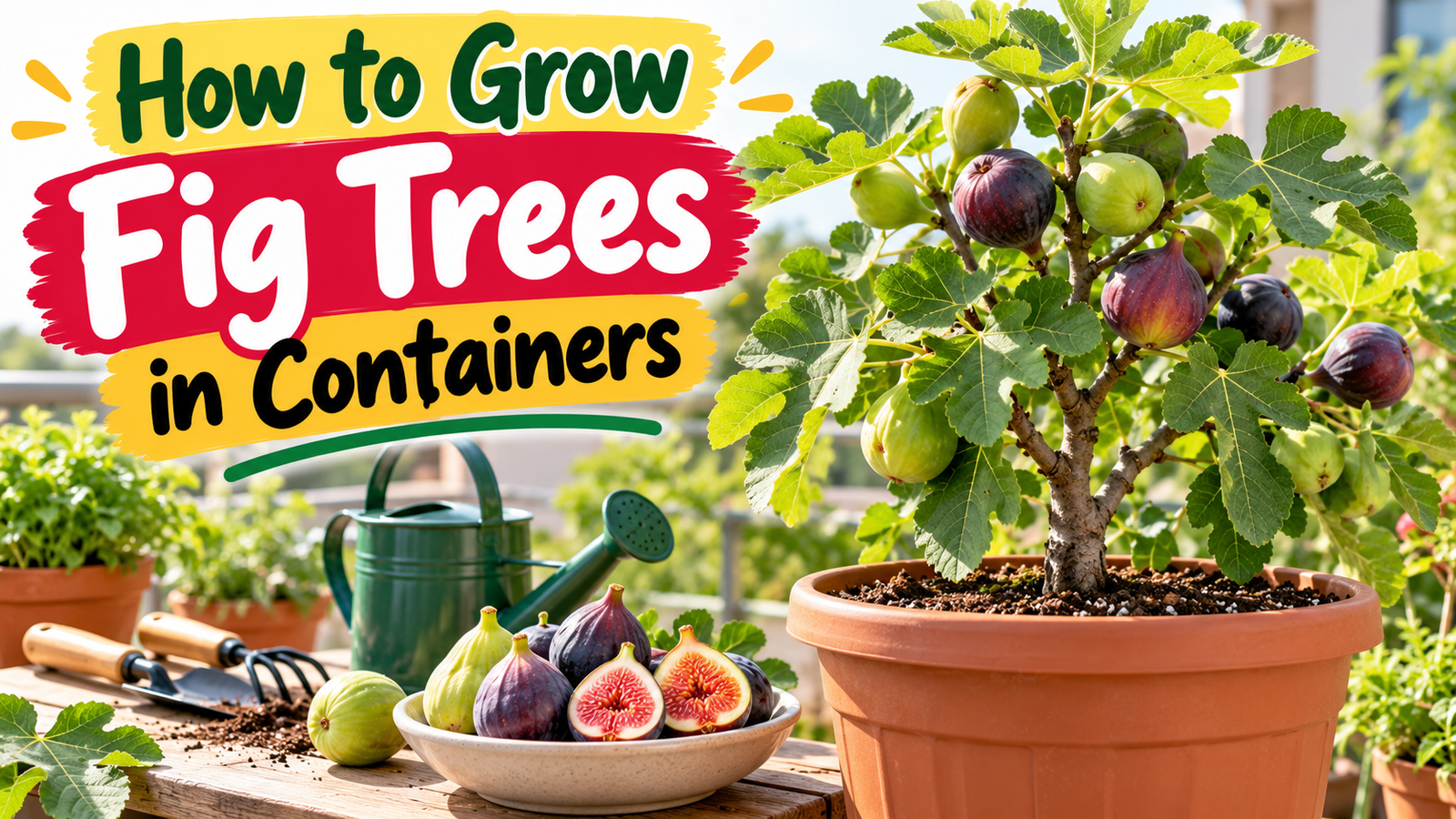
Growing fig trees in containers is a great option for people who have limited garden space. You do not need a large yard to enjoy fresh figs at home. With the right container, good soil, enough sunlight, proper watering, and regular care, a fig tree can grow successfully on a balcony, patio, terrace, or small garden area.
I find container gardening especially useful because it gives me better control over the growing environment. A fig tree planted in a pot can be moved when necessary, protected during difficult weather, and kept at a manageable size through regular pruning.
If you are interested in learning how to grow fig trees in containers, the good news is that figs can adapt well to container growing when their basic needs are met. The most important thing is to choose the right variety and give the roots enough space to develop.
Choose the Right Fig Variety
The first step in growing a fig tree in a container is selecting a suitable variety. Some fig trees can become quite large, so naturally smaller or container friendly varieties are often easier to manage.
When buying a fig tree, ask your local nursery about varieties that perform well in your climate. Local varieties can be especially useful because they are already adapted to the temperature and growing conditions in your area.
A healthy young fig tree is usually easier to establish than a weak or damaged plant. Look for a tree with healthy leaves, a strong stem, and no obvious signs of pests or disease.
Choose a Large Container
The container is one of the most important parts of growing a fig tree successfully. Figs develop a substantial root system, so they need enough room for their roots.
Choose a strong container with several drainage holes at the bottom. A container that is too small can restrict root growth and may cause the soil to dry out quickly.
A large pot also provides better stability as the tree grows. Heavy containers are particularly useful because mature fig trees can become top heavy.
You can start with a smaller container for a young tree and gradually move it into a larger one as it grows. However, if you already have a suitable young tree, placing it directly into a reasonably large container can reduce the need for frequent repotting.
Use Well Draining Soil
Fig trees prefer soil that drains well. Water should be able to move through the soil rather than remaining around the roots for long periods.
A good container growing mix can include quality potting soil combined with organic material such as compost. The goal is to create soil that holds enough moisture for the plant while still allowing excess water to drain.
Avoid using heavy garden soil by itself in a container. It can become compacted and may not provide the drainage that a potted fig tree needs.
Before planting, make sure the drainage holes are open and not blocked.

Planting a Fig Tree in a Container
Once you have your container and soil ready, planting is relatively simple.
Place some growing mix in the bottom of the container. Position the fig tree so that it sits at approximately the same depth as it was growing in its original nursery container.
Fill the space around the root ball with soil and gently press it into place. Avoid packing the soil too tightly.
Water the tree thoroughly after planting. This helps settle the soil around the roots and removes large air pockets.
Place the container in a suitable location where the tree can receive plenty of sunlight.
Give the Fig Tree Enough Sunlight
Sunlight is essential for healthy fig growth and fruit production. Choose the sunniest practical location available.
A fig tree generally performs best when it receives several hours of direct sunlight each day. A sunny balcony, patio, terrace, or garden area can work well if there is enough light.
If the tree receives too little sunlight, growth may become weak and fruit production can be reduced.
When moving a young fig tree from a sheltered location into strong sunlight, it can be helpful to introduce it gradually. This gives the plant time to adjust to the new conditions.
Watering Container Fig Trees
Watering is particularly important because container soil can dry out faster than soil in the ground.
Check the soil regularly by feeling the surface and a little below it. When the soil begins to dry, water the tree thoroughly.
Avoid keeping the soil constantly soaked. Excess water can create problems for the roots.
During hot weather, a container may require more frequent watering because sunlight and heat can cause moisture to disappear quickly.
At the same time, watering schedules should not be based only on a fixed number of days. Weather, container size, soil type, and plant size all affect how quickly the soil dries.
Fertilizing a Potted Fig Tree
Container grown fig trees may need additional nutrients because repeated watering can gradually move nutrients through the soil.
A balanced fertilizer can be used during the active growing season according to the product instructions.
Avoid applying excessive fertilizer. Too much fertilizer can encourage lots of leafy growth while not necessarily improving fruit production.
Compost can also be useful as part of a healthy container growing routine. A small amount added appropriately to the soil surface can provide organic matter and nutrients.
Pruning Fig Trees in Containers
Pruning is one of the best ways to keep a container grown fig tree at a manageable size.
Without pruning, a fig tree can become larger than the available space allows. Regular pruning can encourage a more compact shape and make harvesting easier.
Remove dead, damaged, or weak branches first. You can then shape the tree by selectively removing branches that are crossing or growing in an unwanted direction.
Avoid heavy pruning without a clear reason. Different fig varieties have different fruiting habits, so it is useful to understand your variety before making major cuts.
A healthy, well shaped tree is easier to manage in a container.
Protect the Fig Tree From Extreme Weather
Container grown trees are more exposed to temperature changes than trees planted directly in the ground.
During very hot weather, containers can heat up quickly, especially when placed on concrete or other hot surfaces. Providing some protection during the hottest part of the day may help if the tree is under severe heat stress.
During unusually cold weather, a container grown fig tree may need additional protection. One advantage of growing in a pot is that you can move the tree to a more sheltered location when necessary.
If temperatures are expected to become extreme, protect the roots and branches according to the needs of your particular fig variety and local climate.
Repotting a Fig Tree
A fig tree may eventually become root bound if it stays in the same container for too long.
Signs can include roots growing heavily around the inside of the pot, water moving through the container unusually quickly, or the plant showing reduced growth despite proper care.
When repotting is necessary, choose a slightly larger container rather than moving immediately into an extremely large pot.
Carefully remove the tree from its old container and inspect the roots. Place it into fresh, well draining growing mix and water thoroughly.
Repotting is also a good opportunity to check the condition of the roots and remove damaged material when appropriate.
How to Encourage Fig Fruit
Healthy growth does not always mean an immediate large harvest. Young trees may need time to become established.
Provide enough sunlight, appropriate watering, suitable soil, and balanced nutrition. Avoid excessive nitrogen because it can encourage leafy growth.
Proper pruning can also help maintain a productive shape.
Another important point is patience. Fig production depends on the variety, tree age, climate, care, and growing conditions. Some trees produce fruit relatively early, while others take longer.
Common Problems With Container Fig Trees
Yellowing leaves can have several causes. Overwatering, poor drainage, nutrient problems, or environmental stress may all contribute.
Leaves that wilt frequently can indicate that the soil is drying too quickly, especially during hot weather.
Poor fruit production may be related to insufficient sunlight, inappropriate pruning, excessive fertilizer, or the natural characteristics of the variety.
Pests can also affect fig trees. Check the leaves and stems regularly for insects or other signs of damage. Early detection makes problems easier to manage.
The best approach is to look at the entire growing environment instead of assuming that every problem has the same cause.
Tips for Growing Healthy Figs in Containers
Choose a container with good drainage.
Use a quality well draining growing mix.
Select a variety that suits your climate and available space.
Place the tree in a sunny location.
Water when the soil begins to dry rather than following a strict schedule.
Avoid keeping the roots constantly wet.
Feed the tree appropriately during active growth.
Prune regularly to maintain a manageable size.
Protect the container from extreme temperatures.
Check regularly for pests and diseases.
Repot when the roots have clearly outgrown the container.
Harvest ripe figs carefully to avoid damaging the branches.
When to Harvest Figs
Knowing when to harvest is important because figs are generally best when allowed to ripen properly on the tree.
A ripe fig usually becomes softer and may begin to droop slightly from the branch. Depending on the variety, the fruit may also change color as it matures.
Do not rely on color alone because different fig varieties can have very different appearances when ripe.
Handle ripe figs gently because they can bruise easily. Fresh figs are delicate and are best enjoyed soon after harvesting.
Final Thoughts
Learning how to grow fig trees in containers can be a rewarding project even if you have limited outdoor space. With a suitable variety, a large container, well draining soil, plenty of sunlight, and proper watering, you can create a healthy environment for a productive fig tree.
I especially like container growing because it provides flexibility. You can move the tree when weather conditions change, keep its size under control, and enjoy fresh figs without needing a large garden.
The most important thing is to avoid rushing the process. Give the tree time to establish its roots and pay attention to changes in the soil, leaves, branches, and fruit.
With regular care and a little patience, a container grown fig tree can become an attractive and useful addition to a balcony, patio, terrace, or home garden.


