

Growing a mango tree from seed can be a fun and rewarding gardening project. If you enjoy fresh mangoes and want to experience the process of growing a tree from the beginning, planting a mango seed is an interesting place to start. With the right care, a mango seed can germinate and develop into a healthy young plant.
I personally find growing mango trees from seed more exciting than simply buying a mature plant because you get to watch every stage of development. You can start with a mango you already have at home, prepare the seed, encourage it to sprout, and eventually plant the young seedling in soil.
However, growing a mango tree from seed requires patience. A seed grown mango tree can take several years to reach fruiting age, and the quality of the fruit may not be identical to the mango from which the seed came. Even so, the process can be a great gardening experience.
Choose a Healthy Mango
The first step is selecting a healthy, ripe mango. Choose a mango that is fully mature and free from obvious signs of rot or disease.
After enjoying the fruit, carefully remove the large seed from the center. Clean away as much of the remaining fruit as possible.
Do not allow large amounts of fruit pulp to remain on the seed because it can encourage mold during germination.
If possible, use a mango that was fully ripe and healthy. A good quality seed gives you a better starting point for your growing project.
Clean the Mango Seed
Once you have removed the mango seed, wash it gently under clean water.
Remove any remaining fruit fibers from the outside. You can then leave the seed to dry for a short period in a clean, shaded location.
Mango seeds have a hard outer covering. Inside this covering is the actual seed that can produce a new plant.
When handling the seed, avoid damaging the inner part. A cracked or injured seed may have a lower chance of growing successfully.
Open the Mango Seed Carefully
Mango seeds have a hard shell that protects the inner seed. Some gardeners plant the entire seed shell, while others carefully open the outer covering and remove the inner seed.
If you decide to open the shell, work carefully to avoid cutting or damaging the inner seed.
Use a clean tool and gently separate the outer shell along its natural edge. The inner seed may look similar to a large bean.
If the inner seed is healthy, it can be used for germination.
You can also try planting the whole seed if you prefer a simpler method. However, removing the outer shell can sometimes make it easier to observe the germination process.
Check the Seed Before Planting
Look closely at the inner seed before planting it. A healthy seed is generally firm and light in color.
If it has a strong unpleasant smell, obvious mold, or severe discoloration, it may not be suitable for planting.
Do not worry if the seed has a slightly uneven shape. Natural variation is normal.
The most important thing is that the seed is firm and appears healthy.
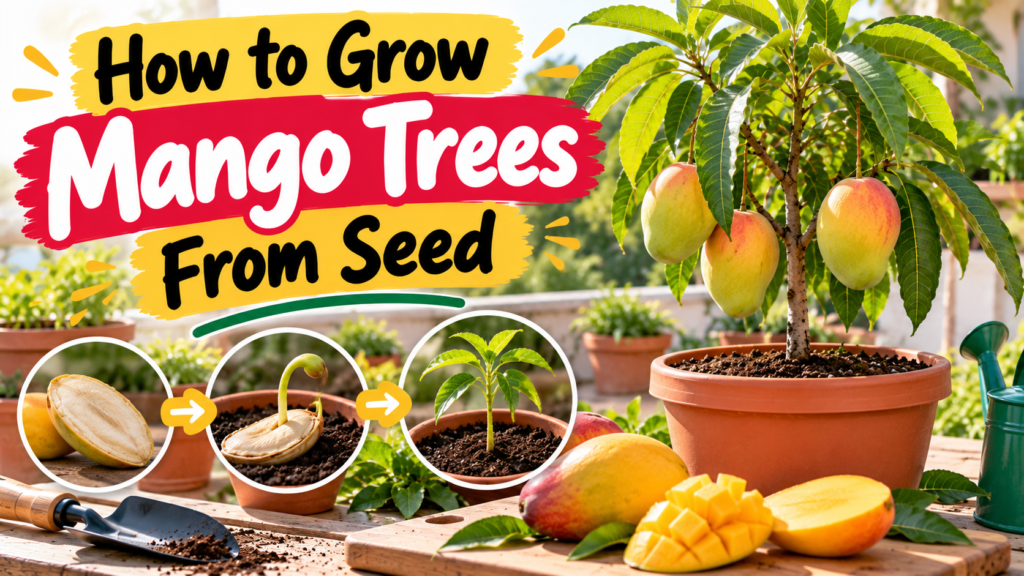
How to Germinate a Mango Seed
There are several ways to germinate mango seeds. One simple approach is to place the seed directly into moist soil.
Another method is to use a damp paper towel.
For the paper towel method, wrap the clean seed in a slightly damp paper towel. Place it inside a clean container or suitable plastic bag.
Keep it in a warm location away from direct sunlight.
Check the seed regularly. The paper towel should remain slightly moist but not soaking wet.
After some time, the seed may begin to develop a root. Once the root becomes visible, you can transfer the seed to a container with suitable soil.
Planting the Mango Seed in Soil
Choose a container with drainage holes. Fill it with a good quality, well draining potting mix.
Make a hole in the soil and place the seed carefully.
If a root has already developed, position the root downward. Cover the seed with soil while leaving enough space around the surface for water to reach the roots.
Do not bury the seed excessively deep.
Water gently after planting. The soil should be moist but not constantly soaked.
Place the container somewhere warm with plenty of indirect or gentle sunlight while the young plant becomes established.
Give the Seedling Enough Light
Once the mango seed begins to grow, light becomes very important.
A young mango plant needs plenty of light for healthy development. If it grows indoors, place it near a bright window where it can receive good natural light.
As the plant becomes stronger, it can gradually be introduced to more direct sunlight.
Avoid suddenly moving a young seedling from a shaded indoor environment into intense outdoor sunlight. Gradual adjustment can reduce stress on the plant.
If you live in a warm climate, mango trees generally appreciate plenty of sunlight once established.
Watering a Young Mango Plant
Watering is one of the most important parts of caring for a mango seedling.
Check the soil regularly. When the upper portion begins to dry, water the plant thoroughly.
Avoid watering again while the soil is still heavily wet.
Too much water can create poor conditions around the roots and may lead to root problems.
At the same time, do not allow a young plant to remain completely dry for long periods.
The right balance is moist soil with good drainage.
Move the Mango Seedling to a Larger Container
As the mango plant grows, its roots will need more room.
If you started the seed in a small container, eventually you may need to move it into a larger pot.
Choose a container with drainage holes and fresh, well draining soil.
Carefully remove the young plant while trying to disturb the root system as little as possible.
Place it into the new container at approximately the same depth and water it after planting.
Do not move the seedling into an extremely large container immediately. Increasing the container size gradually can make watering easier to manage.
Planting a Mango Tree in the Garden
If your climate is warm enough and you have enough outdoor space, you can eventually plant the mango tree in the ground.
Choose a sunny location with enough space for the mature tree.
Mango trees can become large, so do not plant one too close to buildings, walls, power lines, or other large trees.
The soil should drain well and should not remain waterlogged after watering or rain.
Before planting, remove weeds and prepare the soil with suitable organic matter if needed.
Watering a Mature Mango Tree
Once established, mango trees can become more tolerant of periods of dry weather, depending on the climate and soil.
Young trees need more consistent moisture while their roots develop.
As the tree matures, water deeply when needed rather than giving small amounts every day.
During very hot or dry weather, monitor the soil more frequently.
Avoid creating constantly wet conditions around the roots.
Fertilizing Mango Trees
Mango trees need nutrients for healthy leaves, branches, flowers, and fruit.
A soil test can help identify nutrient deficiencies. If fertilizer is needed, choose one suitable for fruit trees and follow the product instructions.
Organic compost can also contribute to healthy soil when used appropriately.
Avoid excessive fertilizer, especially excessive nitrogen. Too much nitrogen can encourage leafy growth while not necessarily improving fruit production.
As the tree develops, observe its overall health and adjust your care accordingly.
Pruning a Mango Tree
Pruning can help shape a mango tree and keep its growth manageable.
Remove dead, damaged, or diseased branches when appropriate. You can also remove branches that cross each other or grow in an undesirable direction.
If you are growing the tree in a container, pruning can be particularly useful for maintaining a practical size.
Avoid heavy pruning without a clear reason. Young trees benefit from developing a strong structure before major shaping is attempted.
How Long Does a Mango Tree From Seed Take to Produce Fruit?
This is one of the most important questions for beginners.
A mango tree grown from seed can take several years to produce fruit. The exact time depends on the mango type, growing conditions, climate, tree health, and other factors.
Some seed grown trees may produce fruit earlier, while others can take many years.
The fruit may also differ from the mango that produced the seed. Seed grown mangoes do not always reproduce the exact characteristics of the parent fruit.
If your main goal is reliable fruit production, a grafted mango tree is generally a better choice. If your goal is to enjoy the growing process, starting from seed can be a rewarding experiment.
Common Problems When Growing Mango From Seed
One common problem is overwatering. Beginners sometimes assume that frequent watering will help the seed grow faster, but excessive moisture can damage the roots.
Another issue is poor drainage. Always use containers with drainage holes and suitable soil.
Insufficient light can also cause weak, stretched growth.
Suddenly exposing a young plant to strong sunlight can cause leaf damage.
Pests may occasionally appear on young leaves. Inspect the plant regularly and deal with problems early.
Finally, impatience can become a problem. Mango trees take time to develop, so give the plant room to grow naturally.
Tips for Growing Mango Trees From Seed
Choose a healthy ripe mango.
Clean the seed thoroughly.
Handle the inner seed carefully.
Keep the germination environment warm and slightly moist.
Use well draining soil.
Provide plenty of light.
Avoid excessive watering.
Move the seedling into larger containers as it grows.
Protect young plants from extreme temperatures.
Prune carefully as the tree develops.
Be patient about fruit production.
Final Thoughts
Learning how to grow mango trees from seed is a simple gardening project that can teach you a lot about plant growth. Starting with a mango you have eaten at home and watching a small seed develop into a young tree can be surprisingly rewarding.
The most important things are choosing a healthy seed, providing warmth and moisture during germination, using well draining soil, and giving the young plant enough light.
If you want fruit as quickly and reliably as possible, a grafted mango tree is usually a better option. But if you enjoy gardening and want to experience the complete process, growing a mango tree from seed can be an excellent project.
With proper care and patience, that small mango seed can become a beautiful tree that adds greenery to your garden and may eventually reward you with homegrown mangoes.


