
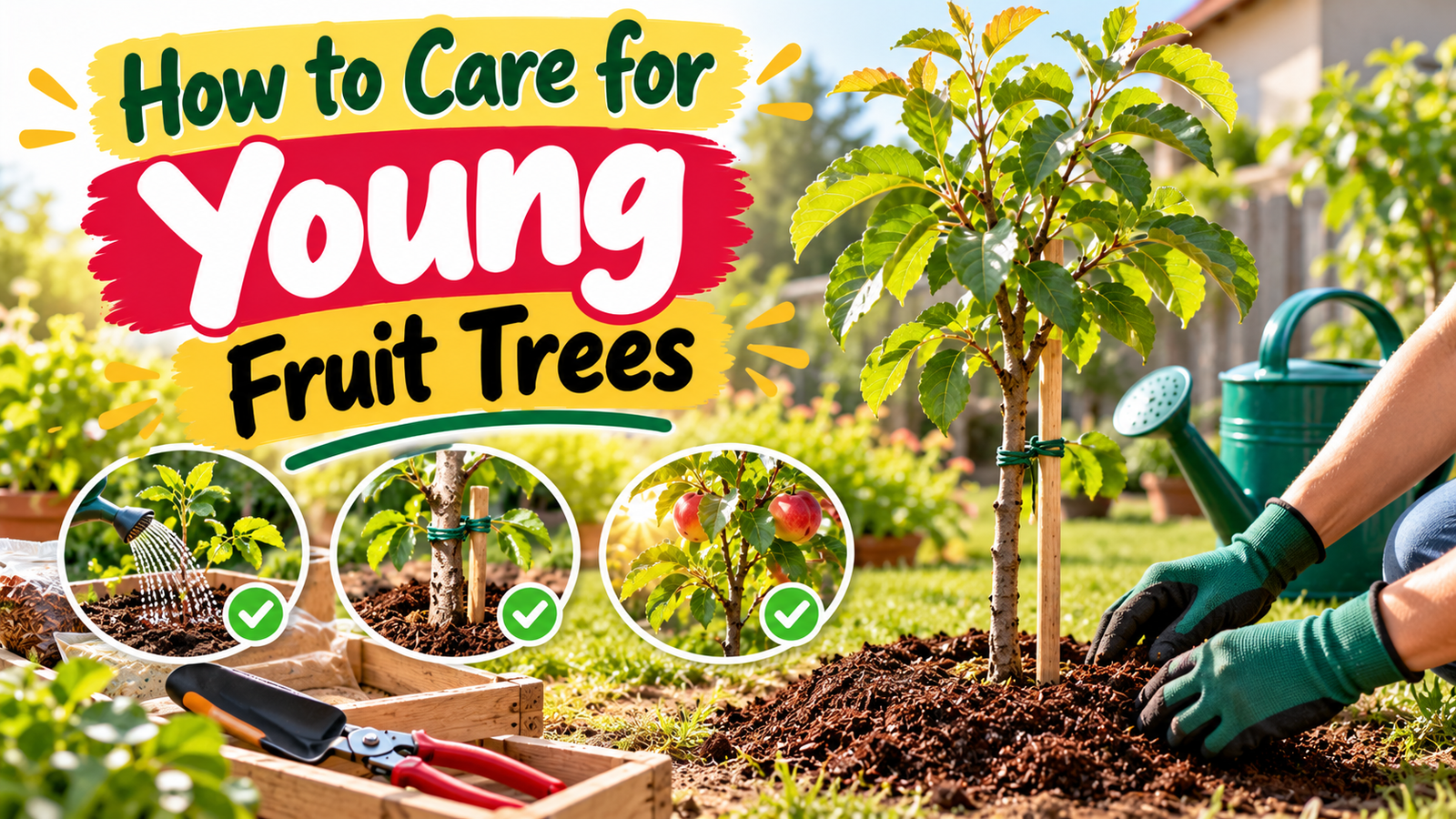
Growing a fruit tree at home can be a very rewarding experience, but young fruit trees need proper care during their early years. A newly planted tree may look small and delicate, yet with the right attention it can develop strong roots, healthy branches, and eventually produce delicious fruit.
In my experience, the most important part of caring for young fruit trees is consistency. Trees do not need complicated care every day, but they do need the right amount of water, sunlight, nutrients, and protection. Good care during the early stages can make a big difference in the future health and productivity of the tree.
Whether you are growing an apple, mango, lemon, orange, peach, guava, fig, pomegranate, or another type of fruit tree, the basic principles are similar. In this guide, I will explain how to care for young fruit trees and help them establish strong and healthy growth.
Choose the Right Location
The location of a young fruit tree is one of the first things I consider before planting. Most fruit trees need plenty of sunlight to grow properly. A location that receives around six or more hours of direct sunlight each day is suitable for many fruit trees.
Avoid planting the tree in a place where buildings, large trees, or walls block sunlight for most of the day. Poor sunlight can result in weak growth and fewer flowers and fruits later.
Good air circulation is also helpful. Avoid extremely crowded locations where the tree will have little space to develop.
Give the Tree Enough Water
Watering is especially important during the first few years because young fruit trees have smaller root systems than mature trees. Their roots may not yet reach deep into the soil where moisture is naturally available.
After planting, water the tree thoroughly so moisture reaches the root area. During warm or dry weather, check the soil regularly.
I prefer checking the soil before watering instead of following a strict schedule. If the top few inches of soil feel dry, the tree may need water. If the soil is still moist, watering again may not be necessary.
Avoid keeping the soil constantly soggy. Too much water can reduce oxygen around the roots and may cause root problems.
Protect the Roots With Mulch
Mulching is one of the simplest ways to help young fruit trees. A layer of organic mulch around the tree can help maintain soil moisture and reduce competition from weeds.
You can use materials such as dry leaves, compost, straw, or other suitable organic material. Spread the mulch around the root zone, but do not place it directly against the trunk.
Leaving a small space between the mulch and trunk helps reduce moisture related problems around the bark.
Mulch can also help keep the soil cooler during hot weather, which is particularly useful for young trees.

Keep Weeds Away
Young fruit trees have limited root systems, so weeds can compete with them for water and nutrients.
Keep the area around the tree reasonably free from weeds and grass. You do not need to remove every plant from the entire garden. Simply keeping the immediate root zone clear can make a noticeable difference.
Mulching can make weed control easier while also helping the soil retain moisture.
Use Fertilizer Carefully
Young fruit trees need nutrients for healthy growth, but more fertilizer does not always mean faster or better growth.
If the soil is already fertile, the tree may need little additional fertilizer during its early stages. Before applying fertilizer, it is useful to understand the needs of the specific fruit tree and the condition of your soil.
A balanced fertilizer or a fertilizer recommended for fruit trees can be used when appropriate. Always follow the product instructions rather than applying large amounts.
Too much nitrogen can encourage excessive leafy growth while delaying flowering and fruit production. For young trees, my approach is to focus on steady, healthy growth instead of trying to make the tree grow as quickly as possible.
Prune Young Fruit Trees Carefully
Pruning helps young fruit trees develop a strong structure. However, young trees usually do not need aggressive pruning.
Remove damaged, dead, diseased, or badly positioned branches when necessary. Depending on the type of fruit tree, you may also need to encourage a suitable shape with well spaced main branches.
The best pruning method depends on the fruit tree variety. Apple trees, citrus trees, mango trees, peach trees, and fig trees can have different pruning requirements.
Avoid removing too many healthy branches at once. Young trees need their leaves to produce energy through photosynthesis, so excessive pruning can slow development.
Provide Support When Needed
Some newly planted fruit trees may need temporary support, especially if they are tall, exposed to strong winds, or have a weak root system.
A tree stake can help keep the tree stable while its roots become established. The support should not be so tight that it prevents natural movement.
I recommend checking the support regularly. As the tree becomes stronger, unnecessary staking should eventually be reduced or removed.
Protect Young Trees From Animals
Young fruit trees can be damaged by animals, insects, and even accidental contact with gardening equipment.
Protect the trunk if animals in your area are likely to chew or damage the bark. A simple protective barrier around the tree can help.
Be careful when mowing grass or using garden tools near the trunk. A small injury to young bark can create an opportunity for pests or diseases.
Watch for Pests
Regular inspection is one of the easiest ways to protect young fruit trees from pests. Check the leaves, stems, and new growth every few days.
Look for signs such as holes in leaves, curled leaves, sticky surfaces, unusual spots, or visible insects.
Do not automatically use strong pesticides whenever you notice an insect. First identify the problem if possible. Some insects are harmless or may even help control other pests.
Good garden hygiene, healthy soil, proper watering, and good air circulation can all help reduce pest problems.
Watch for Diseases
Young fruit trees can sometimes develop fungal, bacterial, or other diseases. Common warning signs include unusual leaf spots, branch damage, wilting, discoloration, or poor growth.
Remove badly damaged plant material when appropriate and dispose of diseased material properly. Avoid placing infected leaves or branches into compost if the disease could survive there.
Good spacing and air circulation can help keep foliage dry and reduce conditions that encourage some diseases.
If you are unsure about a serious disease problem, it is better to identify the cause before applying a treatment.
Protect Young Trees From Extreme Weather
Young fruit trees are more vulnerable to extreme weather than established trees. Strong winds can damage branches, while intense heat can cause water stress.
During very hot periods, make sure the tree receives adequate moisture. Mulching can also help protect the root zone from excessive heat.
If your area experiences unusually cold temperatures, protect sensitive young trees according to the requirements of the particular variety.
Some fruit trees are naturally better suited to warm climates, while others require cooler conditions. Choosing a suitable variety for your local climate is therefore very important.
Do Not Expect Fruit Too Quickly
One common mistake I see among new gardeners is expecting a young fruit tree to produce a large harvest immediately.
Fruit trees need time to establish their roots and develop a strong framework. Some varieties may produce fruit within a few years, while others take considerably longer.
If a young tree produces a small number of flowers or fruits, do not assume something is wrong. In some cases, allowing the tree to focus on root and branch development during its early years can be beneficial.
Grafted fruit trees often produce fruit sooner than trees grown from seeds, but the exact time depends on the variety and growing conditions.
Encourage Strong Root Growth
Healthy roots are the foundation of a healthy fruit tree. Good watering practices, suitable soil, proper drainage, and adequate organic matter can support root development.
Avoid disturbing the soil around the tree unnecessarily. Young roots can be damaged by frequent digging.
At the same time, avoid planting other large plants too close to the tree. Give the root system enough space to develop.
Check the Tree Regularly
Young fruit trees are easier to manage when problems are discovered early. I recommend taking a few minutes each week to inspect the tree.
Look at the leaves, trunk, branches, and soil. Check whether the soil is too dry or too wet. Look for insects, damaged branches, and signs of disease.
Regular observation also helps you understand how your tree responds to watering, sunlight, fertilizer, and seasonal changes.
Common Mistakes to Avoid
Several simple mistakes can slow the growth of young fruit trees.
One common mistake is overwatering. More water is not always better. Another mistake is planting the tree too deeply. The planting depth should be appropriate for the tree and its root system.
Over fertilizing is another problem. Excess fertilizer can damage roots and encourage weak or overly soft growth.
Poor pruning can also create problems. Removing too many branches or making unnecessary cuts can weaken a young tree.
Finally, do not ignore the tree after planting. The first few years are an important period for establishing healthy growth.
Simple Care Routine for Young Fruit Trees
A simple routine can make fruit tree care much easier.
Check the soil regularly and water when needed. Inspect leaves and branches for pests or disease. Remove weeds around the root zone. Maintain a suitable layer of mulch. Check tree supports after windy weather. Prune only when necessary and according to the needs of the specific fruit tree.
During the growing season, observe new growth and make adjustments if the tree appears stressed.
The goal is not to constantly interfere with the tree. Instead, provide the basic conditions it needs and respond when a problem appears.
Final Thoughts
Learning how to care for young fruit trees does not have to be complicated. In my view, the most important things are proper sunlight, consistent watering, healthy soil, good drainage, suitable nutrition, careful pruning, and protection from pests and harsh weather.
Young fruit trees need patience. They may take several seasons to become established, but the effort you put into their early care can benefit them for many years.
If you give your tree enough space, monitor its condition regularly, and avoid common mistakes such as overwatering and over fertilizing, you can create a strong foundation for future growth.
A healthy young fruit tree is an investment in your garden. With consistent care and a little patience, that small tree can eventually become a beautiful and productive part of your home garden.


