

Growing strawberries at home can be a fun and rewarding gardening project. I personally like strawberries because they do not require a huge garden, and with the right care, they can grow successfully in containers, raised beds, or small garden spaces. Watching the flowers develop into fresh red strawberries is also one of the most enjoyable parts of growing fruit at home.
Strawberries need suitable sunlight, good soil, regular watering, and proper care to produce healthy fruit. The good thing is that you do not need to be an experienced gardener to get started. With a little patience and attention, even beginners can grow strawberries at home.
In this article, I will explain how to grow strawberries at home, from choosing the right plants and preparing the soil to watering, feeding, protecting, and harvesting the fruit.
Choose the Right Strawberry Plants
The first step is choosing healthy strawberry plants. You can grow strawberries from seeds, but I generally recommend starting with young plants for beginners because they are easier and usually produce fruit sooner.
When buying strawberry plants, look for healthy green leaves, strong growth, and no obvious signs of insects, disease, or damage.
There are different types of strawberries. Some varieties produce fruit mainly during one part of the growing season, while others can produce fruit more continuously under suitable conditions.
Choose a variety that is suitable for your local climate. Local nurseries can be a useful source of information because they may carry varieties that perform well in your area.
Choose the Right Location
Strawberries need plenty of sunlight to grow well. I recommend choosing a location that receives several hours of direct sunlight each day.
Good sunlight helps the plants develop healthy leaves, flowers, and fruit. A location with good air movement can also help reduce excessive moisture around the leaves.
If you are growing strawberries in a small garden, balcony, or patio, containers can be an excellent option as long as they receive enough sunlight.
Growing Strawberries in Containers
One of the easiest ways to grow strawberries at home is in containers. You can use pots, hanging baskets, or other suitable gardening containers with drainage holes.
The container should be large enough to give the roots room to grow. It should also have good drainage because strawberries do not like sitting in waterlogged soil.
Container gardening can be especially useful if you have limited outdoor space. You can place the pots on a sunny balcony, patio, terrace, or small garden area.
I recommend using a clean container and fresh potting mix rather than ordinary soil taken directly from the garden.
Prepare Healthy Soil
Good soil is very important for growing strawberries. They prefer loose, fertile, well drained soil that allows their roots to receive both water and air.
Before planting, I like to improve the growing medium with mature compost or another suitable organic material. This can help improve soil structure and provide nutrients.
Avoid using soil that stays wet for long periods. Poor drainage can cause root problems and make plants weaker.
If you are using containers, choose a quality potting mix designed for fruit, vegetables, or general container gardening.
Plant Strawberries Correctly
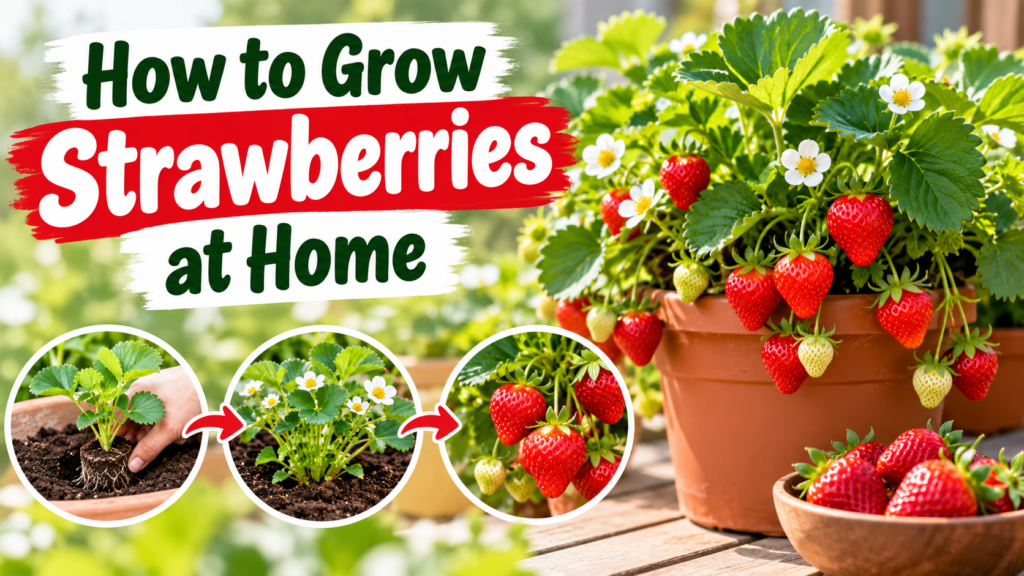
When planting strawberries, avoid burying the central crown too deeply. The crown is the area where the roots and leaves meet.
The roots should be covered with soil, while the crown should remain close to the soil surface.
Planting too deeply can cause problems with the crown, while planting too shallowly can expose the roots.
Give each plant enough space for leaves and runners to develop. Crowded plants can have reduced airflow and may be more difficult to care for.
After planting, water the plants gently to help settle the soil around the roots.
Water Strawberries Properly
Regular watering is important, especially while young strawberry plants are becoming established.
I prefer watering the soil near the base of the plant rather than repeatedly wetting the leaves and fruit. This helps keep the foliage drier and can reduce some disease problems.
The soil should remain consistently moist but not waterlogged.
During hot or dry weather, strawberries may need more frequent watering. Container grown plants can dry out faster than plants growing in the ground, so check them regularly.
The best approach is to check the soil before watering rather than following a strict schedule every day.
Feed Your Strawberry Plants
Strawberries need nutrients for healthy growth and fruit production. Compost can provide useful organic matter, while a suitable fertilizer can provide additional nutrients when needed.
Avoid applying excessive fertilizer because too much nitrogen can encourage lots of leaves while reducing fruit production.
Follow the instructions on the fertilizer label if you are using a commercial product. For organic gardening, mature compost can be incorporated into the growing medium before planting and used carefully as part of ongoing soil care.
Healthy soil is usually more useful than simply adding large amounts of fertilizer.
Use Mulch Around Strawberry Plants
Mulching can be very helpful when growing strawberries. A layer of suitable organic mulch can help maintain soil moisture and reduce contact between the fruit and the soil.
Strawberries that rest directly on wet soil can become dirty and may spoil more quickly.
You can use suitable organic materials such as clean straw or another appropriate garden mulch.
Keep the crown of the strawberry plant uncovered and avoid piling mulch directly against the central growing point.
Remove Unwanted Runners
Strawberry plants often produce runners. These are long stems that grow outward from the main plant and can develop new plants.
If your main goal is to produce more strawberries, you may want to remove some runners so the plant can focus more energy on fruit production.
However, runners can also be useful if you want to create new strawberry plants. You can allow selected runners to root in another container or suitable area.
I recommend keeping only the runners you actually want because too many can make the planting area crowded.
Protect Strawberries From Pests
Strawberries can attract insects, birds, and other garden pests. Regularly checking the plants is one of the simplest ways to identify problems early.
Look underneath leaves and around new growth for signs of insects. Also check developing fruit for damage.
If birds are eating ripe strawberries, protective netting may help. Make sure any garden covering is installed safely and does not trap wildlife.
For insects, maintaining healthy plants and removing heavily damaged leaves can be useful first steps. If you need a treatment, choose an option appropriate for edible crops and follow its label carefully.
Prevent Common Strawberry Problems
Several problems can affect strawberry plants, especially when they are grown in conditions with excessive moisture or poor airflow.
Overwatering can create root problems, while constantly wet leaves can encourage fungal diseases.
Good spacing, proper watering, suitable soil, and regular inspection can help keep plants healthier.
Remove dead or badly damaged leaves when appropriate and keep the growing area clean.
If you notice a serious disease problem, identify the cause before applying any treatment. Using the wrong product can sometimes make the situation worse.
Encourage Flowering and Fruit Production
Healthy strawberry plants need suitable growing conditions to produce flowers and fruit.
Give them enough sunlight, provide balanced nutrition, and maintain consistent soil moisture.
Once flowers appear, avoid unnecessary disturbance of the plants. You should also continue monitoring them for pests.
If you are growing strawberries in a protected area where pollinating insects cannot easily reach the flowers, gentle hand pollination can sometimes help. A small soft brush can be used to move pollen between flowers.
When to Harvest Strawberries
Knowing when to harvest is one of the most enjoyable parts of growing strawberries.
I prefer picking strawberries when they are fully red and look ripe. Strawberries generally do not continue ripening in the same way some fruits do after they are picked, so harvesting them at the right stage is important.
Pick them gently by holding the fruit and removing it with a small part of the stem attached.
Try not to squeeze ripe strawberries because they can bruise easily.
Freshly harvested strawberries can be eaten immediately, added to breakfast, mixed into yogurt, or used in homemade desserts.
How to Store Fresh Strawberries
Strawberries are delicate and can spoil relatively quickly.
I recommend avoiding unnecessary washing until you are ready to eat them. Excess moisture can encourage spoilage.
Store fresh strawberries in the refrigerator in a container that allows some airflow. Remove damaged or moldy berries promptly so the problem does not spread to the others.
For longer storage, strawberries can also be frozen. Wash and dry them carefully before freezing if you plan to store them for later use.
Common Mistakes to Avoid
One common mistake is planting strawberries in a location without enough sunlight. Another is using heavy soil that holds too much water.
Overwatering is also a common problem. More water does not always mean healthier plants.
Planting strawberries too deeply can damage the crown, while overcrowding can reduce airflow.
I also recommend avoiding excessive fertilizer. More fertilizer is not necessarily better, especially when the soil is already fertile.
Finally, do not ignore pests and damaged leaves. Regularly checking your plants makes it easier to deal with small problems before they become serious.
Final Thoughts
Learning how to grow strawberries at home is easier when you focus on a few basic requirements. Give the plants plenty of sunlight, use healthy and well drained soil, water consistently, provide suitable nutrients, and protect the fruit from pests.
You can grow strawberries in a traditional garden, raised bed, container, hanging basket, or another suitable space. This makes them a practical fruit for many home gardeners, including beginners.
In my opinion, the best part of growing strawberries at home is being able to pick fresh fruit directly from your own plants. With regular care and a little patience, a small group of healthy strawberry plants can provide an enjoyable harvest and make your home garden even more rewarding.


