
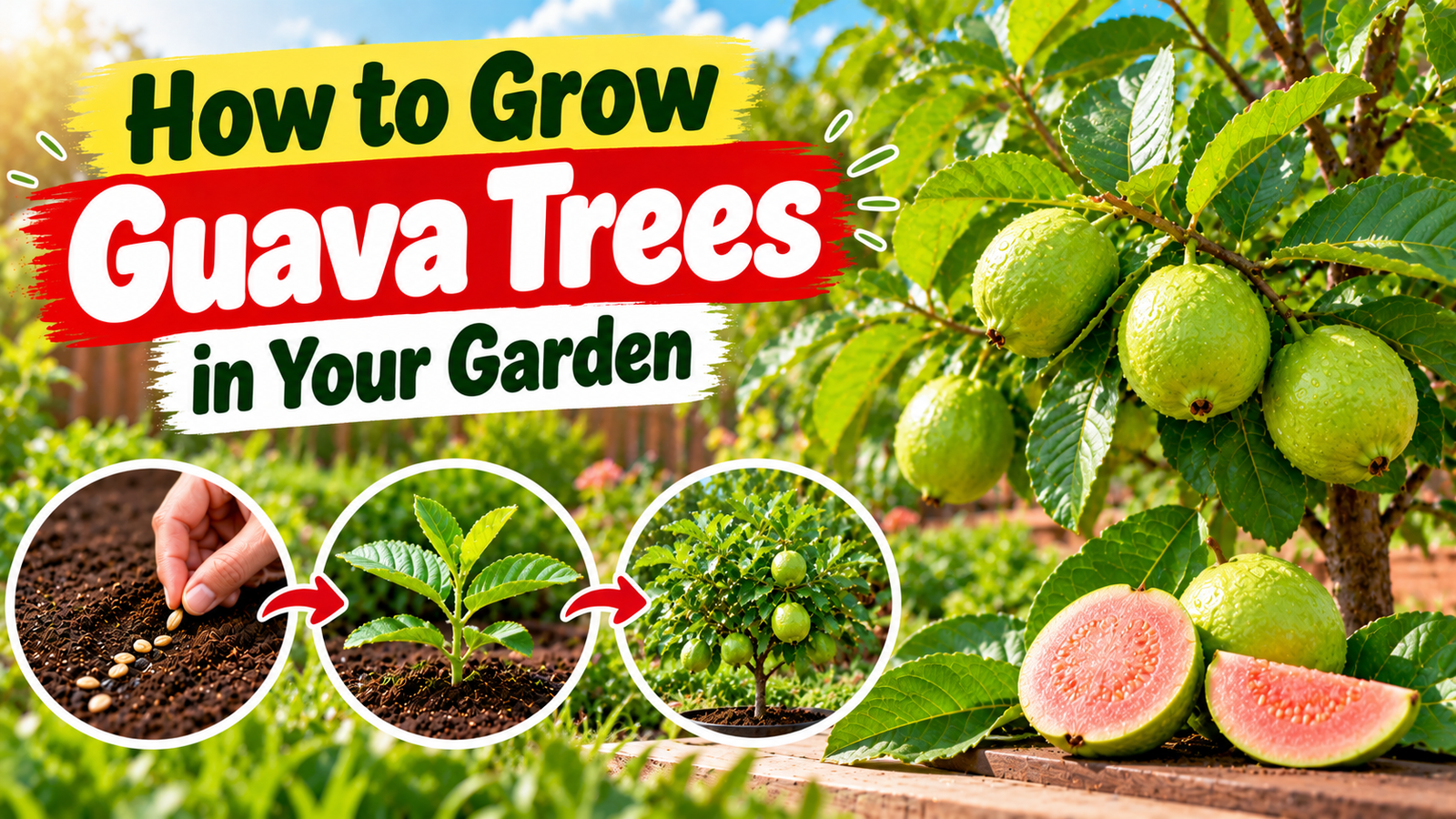
Growing guava trees in your garden can be a rewarding experience, especially when you get to pick fresh guavas directly from a tree you have cared for yourself. In my opinion, guava is one of the most enjoyable fruit trees for a home garden because it can grow well in warm conditions, does not require complicated care, and can provide plenty of delicious fruit when given the right growing environment.
Guava trees can be grown from seeds, cuttings, or young nursery plants. For beginners, I usually recommend starting with a healthy nursery plant because it can establish faster and may produce fruit sooner than a tree grown from seed. With proper sunlight, suitable soil, regular watering, feeding, and pruning, you can grow a healthy guava tree in your garden.
Choose the Right Guava Variety
The first step in growing guava trees is selecting a suitable variety. Guavas can differ in fruit size, flavor, flesh color, and growth habits.
When choosing a plant, consider the climate in your area and the amount of space available in your garden. Some guava varieties can grow into large trees, while others remain more manageable with regular pruning.
A healthy nursery plant is usually a good choice for beginners. Look for a plant with strong green leaves, a healthy stem, and no obvious signs of insects or disease.
If possible, choose a variety that is known to perform well in your local climate. This can make the growing process easier and improve your chances of getting a good harvest.
Select a Sunny Location
Guava trees grow best when they receive plenty of sunlight. Choose a location that receives around six to eight hours of direct sunlight each day.
Good sunlight helps the tree develop strong growth and supports flowering and fruit production. A shaded location may result in weak growth and fewer fruits.
Before planting, observe your garden throughout the day. Make sure nearby walls, buildings, or large trees will not block sunlight for most of the day.
I personally think choosing the right location is one of the most important decisions because moving a mature guava tree later is not practical.
Prepare the Soil
Guava trees can grow in different soil types, but they perform best in soil that drains well and contains enough organic matter.
Before planting, loosen the soil and remove large stones and weeds. If your soil is very heavy or compacted, improve its structure by adding suitable organic matter.
Good drainage is especially important because guava roots should not remain in standing water for long periods.
A simple way to check drainage is to observe how quickly water disappears after watering or rainfall. If water remains around the planting area for a long time, consider choosing another location or improving drainage before planting.
Plant the Guava Tree Properly
Once you have selected the location, prepare a planting hole that is wider than the root ball of the young tree. The hole does not need to be excessively deep.
Carefully remove the plant from its container and place it in the hole. Keep the top of the root ball close to the surrounding soil level.
Fill the hole with soil and gently firm it around the roots. Water the tree thoroughly after planting.
Avoid burying the trunk too deeply. Keeping the trunk close to its original soil level can help reduce moisture related problems around the base.
If you are planting multiple guava trees, leave enough space between them for healthy growth and air circulation.
Water Your Guava Tree Correctly
Young guava trees need regular watering while their root systems are becoming established. Water deeply enough to moisten the root area, then allow the soil to begin drying before watering again.
The exact watering schedule depends on temperature, rainfall, soil type, and the age of the tree.
During hot and dry weather, the tree may need more frequent watering. During rainy periods, reduce additional watering to prevent the soil from becoming excessively wet.
Overwatering is a common gardening mistake. A guava tree needs moisture, but its roots also need access to air. Waterlogged soil can create unhealthy root conditions.
As the tree becomes established, it will generally become more tolerant of short periods of dry weather.

Feed Your Guava Tree
Guava trees benefit from regular nutrition, especially when they are actively growing and producing fruit.
A balanced fruit tree fertilizer can provide important nutrients. Follow the instructions on the fertilizer label and avoid applying excessive amounts.
Compost and other well prepared organic matter can also improve soil quality and provide nutrients over time.
Young trees may benefit from lighter and more frequent feeding, while mature trees may require a different feeding schedule. The tree’s growth, leaf color, flowering, and fruit production can give you useful clues about its condition.
I prefer using a balanced approach rather than adding large amounts of fertilizer at once.
Prune the Guava Tree
Pruning can help control the size and shape of a guava tree. It can also improve airflow through the branches and make harvesting easier.
Remove dead, damaged, or diseased branches first. You can also remove branches that are growing too close together or crossing each other.
If your guava tree becomes too tall, careful pruning can help keep it at a more manageable height.
Avoid removing too much healthy growth at one time. Heavy pruning can stress the tree and may reduce its ability to grow normally.
Use clean and sharp pruning tools to make clean cuts and reduce the chance of spreading plant diseases.
Protect the Tree From Pests
Guava trees can attract several common garden pests. Regularly checking the leaves, stems, flowers, and developing fruit can help you identify problems early.
Look for curled leaves, unusual spots, sticky residue, damaged fruit, or visible insects.
Good garden hygiene is helpful. Remove fallen fruit and plant debris from around the tree, especially if they show signs of pest or disease problems.
For small pest problems, physically removing insects or washing the foliage with water may help. If an infestation becomes serious, use a treatment that is appropriate for fruit trees and follow the label instructions carefully.
Avoid spraying unnecessary chemicals when there is no pest problem. Regular inspection is a better first step.
Encourage Flowering and Fruit Production
Healthy guava trees need suitable growing conditions to produce flowers and fruit. Plenty of sunlight, proper watering, good nutrition, and healthy roots all contribute to productive growth.
Do not expect a very young tree to produce a large harvest immediately. The time required depends on the variety, growing conditions, and whether the tree was grown from seed or purchased as a mature grafted plant.
If your tree is flowering but producing few fruits, review its growing conditions. Make sure it receives enough sunlight and is not suffering from excessive watering, drought, or poor nutrition.
Regular care throughout the year is usually more effective than trying complicated fruit production techniques.
Use Mulch Around the Tree
Mulching can be helpful for guava trees, especially in warm and dry conditions. Organic mulch can help conserve soil moisture, reduce weed growth, and gradually contribute organic matter to the soil.
You can use suitable materials such as dry leaves, compost, or other organic garden materials.
Keep the mulch away from direct contact with the trunk. A small open area around the base of the tree helps prevent excessive moisture from staying against the bark.
Do not create an extremely thick layer of mulch. A moderate layer is generally easier to manage and allows water to reach the soil.
Protect Guava Trees From Extreme Weather
Guava trees prefer warm conditions, but young plants can be more sensitive to extreme temperatures.
During very hot weather, make sure young trees receive adequate water. Mulching can also help reduce moisture loss from the soil.
Strong winds can damage young branches, so planting the tree in a reasonably sheltered location can be helpful.
If unusually cold weather occurs, young trees may need additional protection. Container grown guava plants are easier to move to a protected location, while established trees planted in the ground are more difficult to protect.
Harvest Guavas at the Right Time
Harvesting is one of the most enjoyable parts of growing guava trees at home.
The exact signs of ripeness depend on the variety. Mature guavas may change color, become slightly softer, and develop a stronger aroma.
Avoid waiting too long once the fruit becomes ripe because guavas can soften quickly. Check the tree regularly as the fruit approaches maturity.
Use your hands carefully when harvesting or use clean pruning shears if needed. Avoid pulling or twisting the fruit aggressively because this can damage young branches.
Freshly harvested guavas can be eaten directly or used in juices, smoothies, desserts, jams, and other homemade foods.
Common Guava Growing Mistakes
One common mistake is planting guava trees in a location with insufficient sunlight. Guavas need plenty of light for strong growth and good fruit production.
Another mistake is overwatering. Constantly wet soil can create unhealthy root conditions.
Using too much fertilizer is also unnecessary. Excessive feeding can cause unbalanced growth and may damage the plant.
Poor pruning practices can create another problem. Removing too many branches can stress the tree, while never pruning can allow the canopy to become crowded.
Finally, do not ignore small pest problems. Regular inspection makes it much easier to deal with insects before they become a major issue.
Final Thoughts
Learning how to grow guava trees in your garden does not have to be difficult. The most important things are choosing a healthy plant, selecting a sunny location, preparing well drained soil, watering properly, providing suitable nutrition, and pruning when necessary.
In my experience, patience and consistency are more important than complicated gardening methods. A guava tree may take time to establish, but once it becomes healthy and productive, it can provide fresh fruit for years.
With regular attention and suitable growing conditions, growing guava trees at home can become an enjoyable part of your gardening routine. Watching the tree flower and then seeing small fruits develop is one of the most satisfying experiences for a home gardener.


