

Growing pomegranate at home can be a rewarding gardening project, especially when you eventually harvest your own fresh and juicy fruits. In my opinion, pomegranate is one of the most interesting fruit plants to grow because it has attractive flowers, beautiful green leaves, and delicious fruit. It can also tolerate warm and relatively dry conditions once it becomes established.
Learning how to grow pomegranate at home does not require advanced gardening skills. With the right location, healthy soil, enough sunlight, proper watering, and regular care, beginners can successfully grow a pomegranate plant in a home garden or large container.
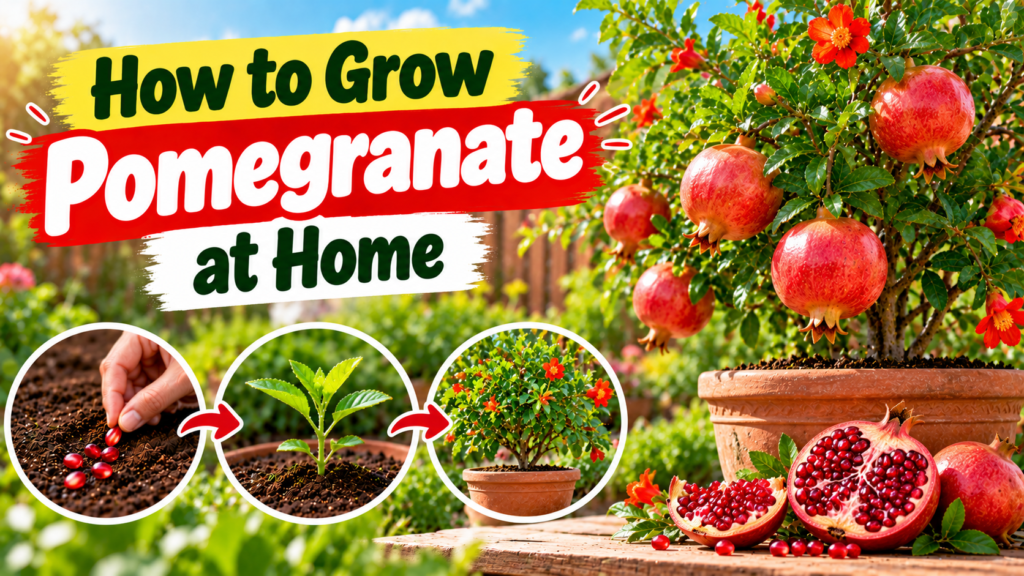
Pomegranate plants can be grown from seeds, cuttings, or nursery plants. If your main goal is to get fruit sooner, starting with a healthy nursery plant is usually easier than growing a tree from seed. In this guide, I will explain the important steps involved in growing and caring for pomegranate at home.
Choose the Right Pomegranate Variety
The first step is choosing a suitable pomegranate variety. Different varieties can produce fruits with different sizes, colors, flavors, and levels of sweetness.
When selecting a plant, consider your local climate and the available space in your garden. Some pomegranate plants can grow into fairly large shrubs or small trees, while others can be maintained at a smaller size through pruning.
For beginners, I recommend purchasing a healthy young plant from a reliable nursery. Look for a plant with healthy leaves, a strong stem, and no obvious signs of pests or disease.
If you want to grow pomegranate in a container, look for a compact variety that can be managed more easily.
Choose a Sunny Location
Pomegranate plants love sunlight. Choose a location where the plant can receive around six to eight hours of direct sunlight each day.
Good sunlight is important for healthy growth, flowering, and fruit development. A location with heavy shade may cause weak growth and reduce flowering.
Before planting, observe your garden at different times of the day. Make sure nearby walls, buildings, or larger plants will not block sunlight for most of the day.
I personally think choosing a sunny location is one of the most important steps because it is much easier to select the right location before planting than to move an established plant later.
Prepare Well Drained Soil
Pomegranate plants are adaptable and can grow in different types of soil, but good drainage is very important.
The soil should hold enough moisture for the roots while allowing excess water to drain away. Constantly wet soil can create unhealthy root conditions.
Before planting, loosen the soil and remove large stones and weeds. Adding suitable organic matter can improve soil structure and provide additional nutrients.
If your garden soil is heavy and drains slowly, consider improving the planting area before introducing the pomegranate plant.
For container growing, use a good quality potting mix that drains well. Make sure the container has drainage holes at the bottom.
Plant the Pomegranate Correctly
Once you have selected a good location, dig a hole that is wider than the root ball of the young plant. The hole should not be unnecessarily deep.
Carefully remove the plant from its nursery container and place it in the hole. Keep the top of the root ball close to the surrounding soil level.
Fill the hole with soil and gently press the soil around the roots. Water the plant thoroughly after planting.
Avoid burying the trunk too deeply. The base of the plant should remain close to the level at which it was growing in the nursery container.
If you are planting multiple pomegranate plants, leave enough space between them for proper airflow and healthy growth.
Water Your Pomegranate Plant Properly
Watering is important during the early stages of growth. A newly planted pomegranate needs regular moisture while its root system becomes established.
Water deeply enough to moisten the root area, then allow the soil to begin drying before watering again.
Once established, pomegranate plants can tolerate relatively dry conditions better than many other fruit plants. However, this does not mean they should be completely neglected during hot and dry weather.
During periods of high heat, check the soil regularly. Container grown pomegranate plants usually dry out faster than plants growing in the ground.
Avoid keeping the soil constantly wet. Overwatering can be just as harmful as allowing the plant to become extremely dry.
Feed Your Pomegranate Plant
Pomegranate plants benefit from good nutrition, particularly during active growth and fruit development.
You can use a balanced fruit tree fertilizer according to the instructions on the package. Avoid applying excessive fertilizer because more fertilizer does not always mean better growth.
Well prepared compost can also be useful for improving soil quality. Add organic matter around the planting area while keeping it away from direct contact with the main stem.
The nutritional needs of a young plant can differ from those of a mature fruit producing plant. Watch the plant’s overall growth and adjust your feeding routine accordingly.
Prune Your Pomegranate Plant
Pruning is an important part of pomegranate plant care. Pomegranate plants can naturally develop multiple stems and may become bushy if they are not managed.
Remove dead, damaged, or diseased branches first. You can also remove weak shoots and branches that grow in crowded areas.
If you want your pomegranate to grow as a small tree, select a strong main stem and gradually remove unwanted shoots from the base.
If you prefer a bushier plant, you can allow several strong stems to develop.
Regular light pruning can make the plant easier to manage and can improve airflow through the canopy. Avoid removing large amounts of healthy growth at once.
Always use clean and sharp pruning tools when cutting branches.
Encourage Flowering and Fruit Production
Pomegranate plants usually need plenty of sunlight and consistent care to flower and produce fruit successfully.
Healthy leaves, adequate nutrition, proper watering, and good airflow all contribute to productive growth.
It is normal for a young plant to take time before producing a meaningful harvest. The exact timing depends on the variety, growing conditions, and whether the plant was grown from seed, cutting, or a nursery grown plant.
When flowers appear, avoid unnecessary stress such as severe drought or excessive watering.
If the plant produces many flowers but few fruits, review its growing conditions. Poor sunlight, nutritional problems, environmental stress, and other factors can affect fruit development.
Protect Pomegranate Plants From Pests
Pomegranate plants can experience common garden pest problems. Regularly inspect the leaves, stems, flowers, and developing fruit.
Look for curled leaves, damaged foliage, unusual spots, sticky residue, or visible insects.
Small pest problems can sometimes be managed by removing insects manually or washing affected foliage with water. Keeping the area around the plant clean can also help reduce pest problems.
If you need to use a pest control product, select one suitable for fruit plants and follow the instructions carefully.
I recommend checking the plant regularly rather than waiting until you notice severe damage.
Use Mulch Around the Plant
Mulching can be helpful for pomegranate plants, particularly during hot weather.
Organic mulch can help reduce moisture loss, suppress weeds, and gradually improve soil quality as it breaks down.
Suitable mulch materials may include dry leaves, compost, or other clean organic garden materials.
Keep mulch a few inches away from the main stem. Placing wet organic material directly against the stem can create unwanted moisture around the base.
A moderate layer of mulch is usually sufficient. There is no need to create a very thick pile around the plant.
Growing Pomegranate in a Container
If you do not have a large garden, you can grow pomegranate in a large container. This can be a practical option for patios, balconies, terraces, and small outdoor spaces.
Choose a container with good drainage holes and enough room for the roots. A dwarf or compact variety is generally easier to manage.
Place the container in a sunny location. Check the soil more frequently because container plants can dry out faster than plants growing in the ground.
As the plant grows, occasional pruning can help maintain a manageable size. If the roots become crowded, you may need to move the plant into a larger container.
Protect the Plant From Extreme Weather
Pomegranate plants generally perform well in warm conditions, but extreme weather can still cause stress.
During very hot weather, make sure young plants receive adequate water. Mulching can help reduce moisture loss from the soil.
Strong winds can damage young branches, so a sheltered planting location can be useful.
Container grown plants have an advantage because they can sometimes be moved to a more protected area when severe weather is expected.
Know When to Harvest Pomegranates
One of the most exciting parts of growing pomegranate at home is harvesting the fruit.
Pomegranates can take several months to develop after flowering. The exact harvest time depends on the variety and growing conditions.
A mature pomegranate often develops its characteristic color and becomes firm but well developed. The fruit may also produce a slightly different sound when gently tapped, although appearance and variety are more reliable guides.
Avoid harvesting too early because the fruit may not have developed its best flavor.
Use clean pruning shears to cut the fruit from the branch rather than pulling it forcefully. This helps reduce damage to the plant.
Common Mistakes to Avoid
One common mistake is planting pomegranate in a location with too much shade. Good sunlight is essential for healthy growth and fruit production.
Another mistake is overwatering. Pomegranate plants can handle relatively dry conditions once established, so constantly wet soil is unnecessary.
Overfertilizing is another problem. Excessive fertilizer can encourage unwanted growth and may disturb the plant’s natural balance.
Poor pruning can also create problems. Removing too much healthy growth can weaken the plant, while ignoring unwanted shoots can result in a crowded plant.
Finally, do not expect a newly planted pomegranate tree to provide a large harvest immediately. Give it time to establish itself.
Final Thoughts
Learning how to grow pomegranate at home can be a simple and enjoyable experience when you understand the basic needs of the plant. Start with a healthy variety, choose a sunny location, prepare well drained soil, water properly, and provide suitable nutrition.
In my view, pomegranate is an excellent choice for a warm home garden because it can become both an attractive plant and a productive source of fresh fruit. Regular pruning can help maintain its shape, while consistent care can support healthy flowering and fruit development.
Whether you grow pomegranate in the ground or in a large container, patience is important. With good sunlight, proper watering, healthy soil, and regular attention, you can enjoy watching your pomegranate plant grow and eventually harvest fresh fruit from your own garden.


