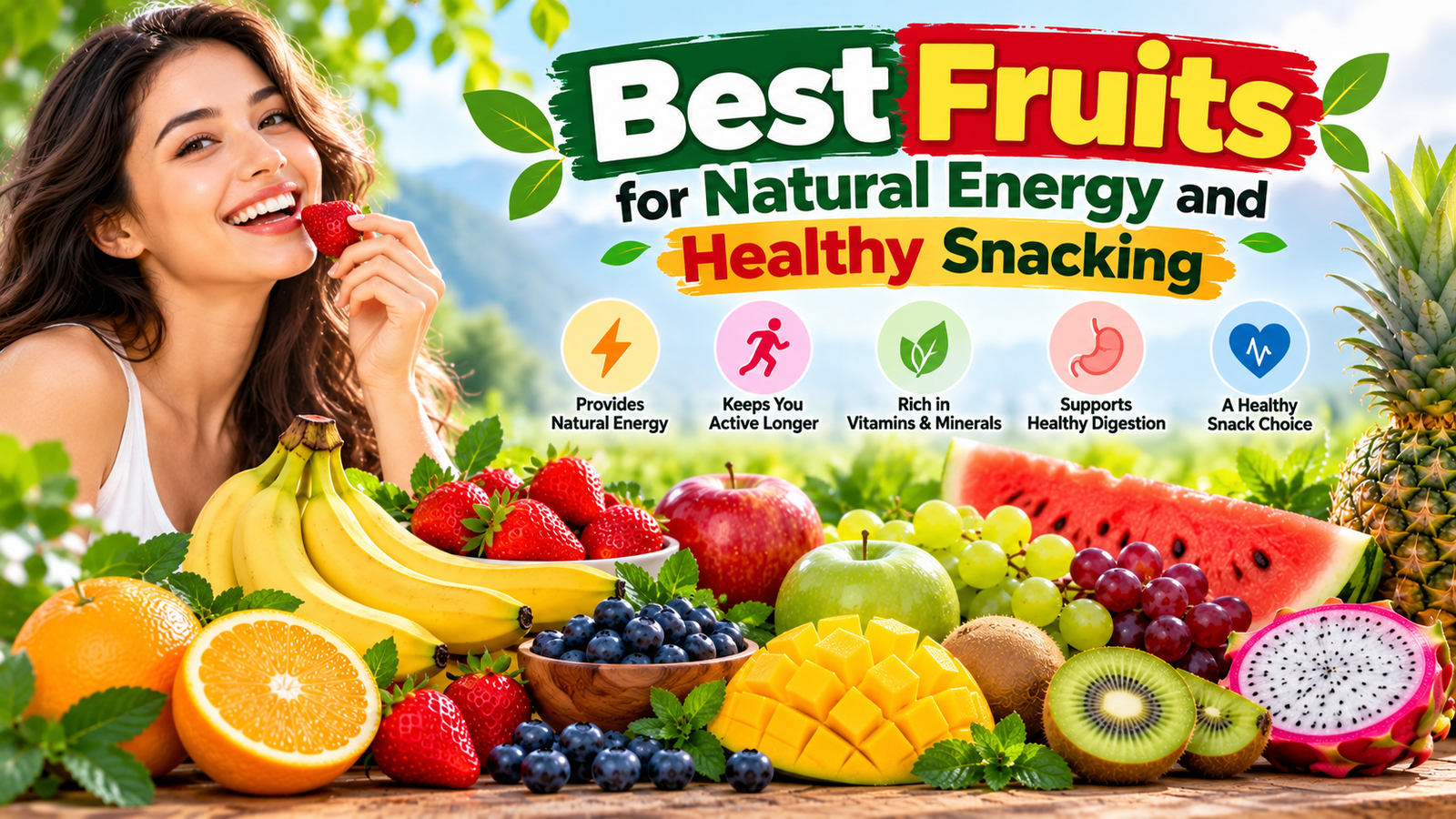
When I feel tired during the day, I often look for something simple that can give me energy without making my diet unnecessarily complicated. For me, fresh fruit is one of the easiest choices. Fruits are naturally sweet, refreshing, and convenient, while also providing carbohydrates, water, vitamins, minerals, and fiber.
Unlike many highly processed snacks, whole fruits can fit easily into a balanced eating routine. They can be enjoyed at breakfast, between meals, before physical activity, or whenever you want something naturally sweet.
In this article, I will discuss some of the best fruits for natural energy and healthy snacking, along with simple ways to include them in your everyday diet.
Why Are Fruits Good for Natural Energy?
The main reason fruit can provide energy is its natural carbohydrate content. Carbohydrates are an important source of energy for the body, particularly during physical activity.
Fruit also contains water and various nutrients that contribute to a healthy diet. The fiber found in whole fruit can make it more filling than many sugary snacks.
I personally think fruit works best as part of a balanced eating pattern rather than as a replacement for proper meals. If you are genuinely hungry, a piece of fruit combined with another nutritious food can make a satisfying snack.
1. Bananas
Bananas are one of the most convenient fruits for healthy snacking. They are naturally sweet, soft, and easy to eat without any preparation.
A banana provides carbohydrates and potassium, making it a practical choice before or after physical activity. You can simply eat one on its own or combine it with yogurt, oats, or nut butter.
I especially like bananas because they are easy to carry. You do not need a container, knife, or refrigerator for a short period, which makes them useful for work, school, and travel.
2. Apples
Apples are another excellent option for natural energy and healthy snacking. They contain carbohydrates and fiber and are available in many different varieties.
The natural sweetness of an apple can satisfy cravings for sugary foods while still providing useful nutrients.
For a more filling snack, I like combining apple slices with peanut butter or another source of protein. This combination can make a simple snack more satisfying.
Whenever possible, eating the apple with its skin provides more fiber than eating a peeled apple.
3. Oranges
Oranges are refreshing and naturally juicy, making them especially useful when you want a light snack.
They provide carbohydrates, vitamin C, water, and fiber when eaten as a whole fruit. Their refreshing taste makes them a good option during warm weather.
I prefer eating an orange rather than replacing it with orange juice when my goal is a nutritious snack because whole fruit provides fiber that is reduced or removed during many juicing processes.
4. Grapes
Grapes are one of the easiest fruits to turn into a quick snack. They are small, naturally sweet, and require very little preparation.
You can wash a portion of grapes and keep them refrigerated for a convenient snack. They can also be combined with yogurt, cheese, or other foods for a more balanced snack.
Frozen grapes can be enjoyable during hot weather as well. Their cold and slightly firm texture makes them feel like a naturally sweet treat.
5. Mangoes
Mangoes are a delicious tropical fruit that can make healthy snacking more enjoyable. They contain natural carbohydrates and provide several vitamins and minerals.
A ripe mango can be eaten fresh, added to a fruit salad, or blended into a smoothie.
Because mango is naturally sweet, it can be a useful choice when you want something sweet without reaching immediately for highly processed desserts.
6. Berries
Strawberries, blueberries, raspberries, and blackberries are excellent additions to a healthy snack routine.
Berries provide fiber and various vitamins and plant compounds while being relatively easy to add to meals.
One of my favorite combinations is berries with plain yogurt. You can also add them to oatmeal or eat them with a small handful of nuts.
Using different berries throughout the week can make your snacks more interesting and colorful.
7. Pineapple
Pineapple is another fruit that can provide a refreshing snack. It contains natural carbohydrates, water, and several nutrients.
Fresh pineapple is particularly enjoyable when served chilled. You can cut it into small pieces and store it in the refrigerator for an easy snack.
Pineapple can also be combined with other fruits to create a simple homemade fruit salad.
8. Watermelon
Watermelon is mostly water, which makes it a refreshing choice, especially during hot weather.
It provides natural carbohydrates and several nutrients while also helping contribute to your daily fluid intake.
I find watermelon particularly useful as a light afternoon snack. It is refreshing without feeling too heavy.
You can cut watermelon into small pieces and store them in the refrigerator so they are ready whenever you want a quick snack.
9. Dates
Dates are naturally sweet and contain carbohydrates, making them a concentrated fruit snack.
Because dried fruits contain less water than fresh fruits, their natural sugars and calories are more concentrated. For this reason, a smaller portion can be enough for a snack.
Dates can be paired with nuts or yogurt if you want a more satisfying combination.
They are also convenient to carry, which makes them useful when you need a quick snack away from home.
10. Pears
Pears are another simple fruit that can fit into almost any healthy snacking routine.
They provide natural carbohydrates and fiber, and their sweet flavor can help satisfy cravings.
A pear can be eaten by itself or sliced and combined with yogurt, oats, or a small amount of nut butter.
I like pears because they are portable and do not require complicated preparation.
11. Kiwi
Kiwi offers a slightly tangy flavor and provides fiber, vitamin C, and other nutrients.
It can be eaten with a spoon after cutting it in half or peeled and sliced into a fruit bowl.
Kiwi also works well with yogurt and other fruits, making it a useful ingredient for a simple homemade snack.
12. Pomegranate
Pomegranate seeds can add flavor and texture to healthy snacks. You can eat them on their own or combine them with yogurt and other fruits.
They provide fiber and various plant compounds and can make an ordinary snack more interesting.
I find that adding colorful fruits such as pomegranate seeds to meals makes healthy eating feel less repetitive.
Fresh Fruit vs Processed Snacks
One reason I recommend whole fruit for snacking is convenience. Many processed snacks contain large amounts of added sugar, salt, or unhealthy fats.
Fresh fruit provides natural sweetness along with fiber and other nutrients.
This does not mean every packaged snack is unhealthy or that fruit should completely replace other foods. A balanced diet can include many different foods.
However, if you regularly reach for cookies, candy, or sugary drinks between meals, replacing some of those choices with whole fruit can be a simple improvement.
How to Make Fruit Snacks More Filling
Fruit can be a great snack on its own, but sometimes you may want something more filling.
One simple approach is to combine fruit with a source of protein or healthy fat.
For example, you can try:
Apple slices with peanut butter
Banana with plain yogurt
Berries with Greek yogurt
Dates with a small portion of nuts
Pear with cottage cheese
Fruit with oatmeal
These combinations can provide a more balanced snack and may help you stay satisfied for longer.
Best Fruits Before Physical Activity
If you are preparing for exercise, easily digested fruits such as bananas, oranges, grapes, or dates can be convenient choices.
The best option depends on the person, the type of activity, and how much time you have before exercising.
For a short activity, a small piece of fruit may be enough. For longer or more demanding activities, you may need a more substantial meal or snack.
It is also important to drink enough fluids before and during physical activity.
How to Build a Healthy Fruit Snack Routine
I believe the easiest way to eat more fruit is to make it convenient.
Keep bananas and apples where you can easily see them. Wash berries and grapes after purchasing them according to appropriate food safety practices and store them properly. Cut larger fruits into portions when you have time.
You can also prepare a simple fruit box for work or school.
Another useful habit is to buy several different fruits instead of purchasing only one type. This gives you more variety and makes it easier to enjoy fruit throughout the week.
Final Thoughts
The best fruits for natural energy and healthy snacking are not necessarily the most expensive or exotic options. Bananas, apples, oranges, grapes, mangoes, berries, pineapple, watermelon, dates, pears, kiwi, and pomegranate can all be useful additions to a balanced diet.
From my point of view, the most important thing is consistency. You do not need to completely change your diet overnight. Start by replacing one processed snack with a piece of whole fruit each day.
Over time, simple habits like keeping fruit available at home, preparing fruit snacks in advance, and combining fruit with nutritious foods can make healthy eating much easier.
Fruit is naturally sweet, convenient, and versatile. Whether you need a quick snack during a busy day or something refreshing after a meal, there are plenty of fruits that can fit naturally into your daily routine.