Fresh fruit and fruit juice are both popular choices, especially when people want something naturally sweet. At first glance, they may seem almost the same because juice comes from fruit. However, there are some important differences between eating a whole piece of fruit and drinking its juice.
From my point of view, understanding these differences makes it easier to make better everyday food choices. Fresh fruits can provide fiber, water, vitamins, minerals, and naturally occurring plant compounds. Fruit juice can also provide some nutrients, but the amount of fiber and the way we consume the natural sugars can be quite different.
In this article, I will compare fresh fruit vs fruit juice, explain their main differences, and share some simple tips for choosing the right option for your daily diet.
What Is Fresh Fruit?
Fresh fruit means eating the whole edible fruit rather than extracting its liquid.
Examples include apples, oranges, mangoes, pears, grapes, strawberries, watermelon, bananas, and many other fruits.
When you eat whole fruit, you usually consume the fruit’s natural fiber along with its water, vitamins, minerals, and other plant compounds.
For example, when you eat an apple, you get the flesh and, if you leave the skin on, additional fiber from the skin.
This combination makes whole fruit a satisfying snack and an easy addition to a balanced diet.
What Is Fruit Juice?
Fruit juice is the liquid extracted from fruit. Depending on the product and preparation method, some juice may contain pulp while other types are filtered and contain very little fiber.
Juice can be made at home or purchased from a store.
There are also many different types of juice products. Some are made entirely from fruit, while others may contain added sugar, concentrates, flavorings, or other ingredients.
This is why reading the nutrition and ingredient label is important when buying packaged fruit juice.
The Biggest Difference Is Fiber
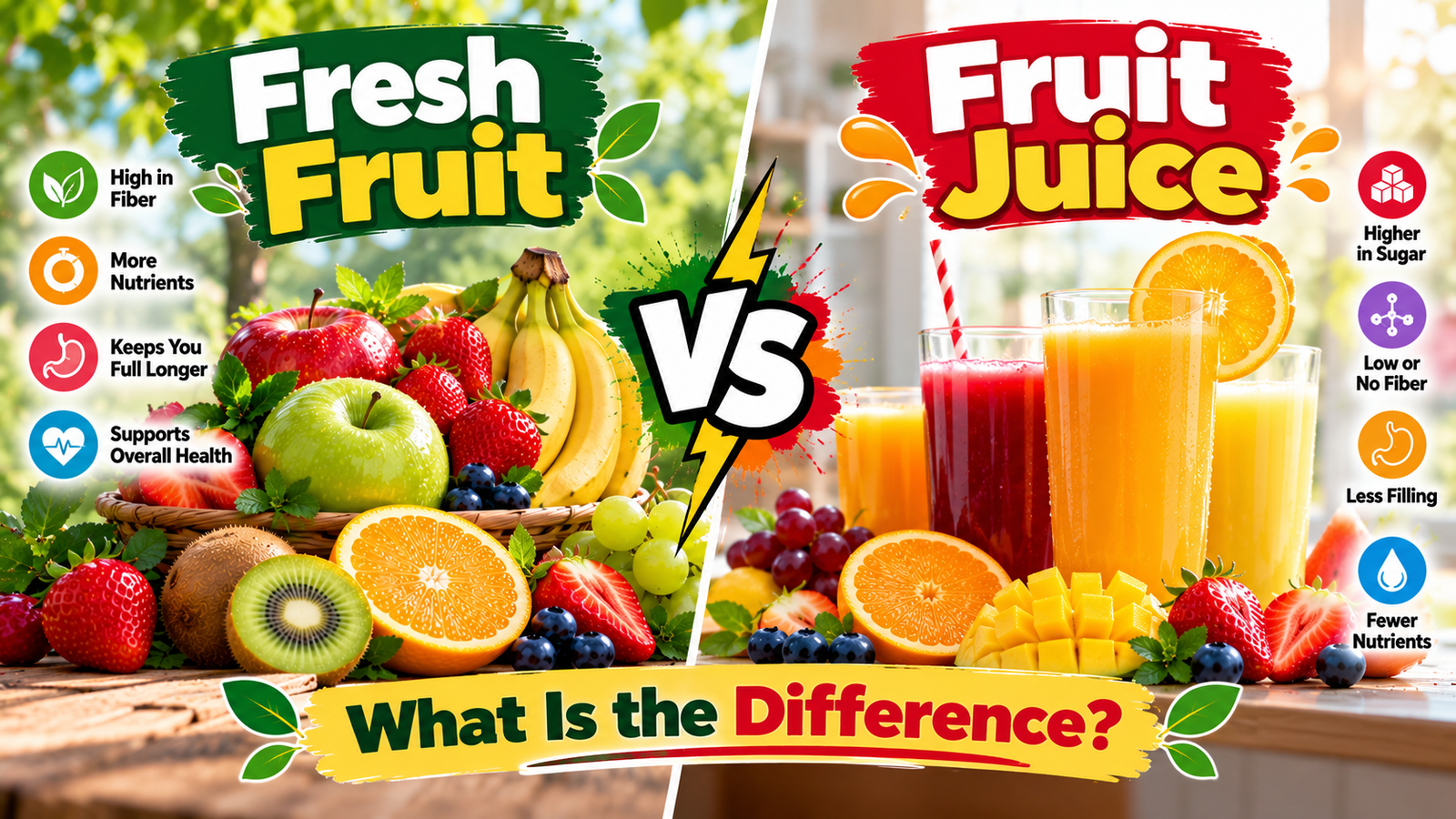
One of the main differences between fresh fruit and fruit juice is dietary fiber.
Whole fruits naturally contain fiber. Fiber is important for digestion and can help make food more filling.
During juicing, much of the fruit’s fiber may be removed, especially when the juice is filtered.
For example, eating a whole orange gives you the fruit’s pulp and fiber. Drinking a glass of orange juice usually provides considerably less fiber.
This is one reason I generally prefer whole fruit when I want a filling and nutritious snack.
Whole Fruit Can Be More Filling
Eating a whole piece of fruit usually takes more time than drinking juice.
When you eat an apple, pear, or orange, you need to chew the fruit. This can make the experience more satisfying.
Juice can be consumed quickly, which means it is possible to drink the equivalent of several pieces of fruit in a short period.
For people trying to manage their overall food intake, whole fruit can therefore be a more practical option.
What About Natural Sugar?
Both fresh fruit and fruit juice contain natural sugars.
The important difference is how easily those sugars can be consumed.
When you eat whole fruit, the fiber and physical structure of the fruit slow down the eating process and make it more filling.
With juice, the fiber may be greatly reduced, making it easier to consume a larger amount of natural sugar quickly.
This does not mean that the natural sugar in whole fruit is something to fear. Whole fruits are nutritious foods that can easily fit into a balanced diet.
The bigger concern is frequently consuming large amounts of sweetened drinks or fruit beverages.
Fresh Fruit Provides Water
Many fruits naturally contain a high percentage of water.
Watermelon, oranges, strawberries, peaches, and many other fruits can contribute to your daily fluid intake.
Juice also contains water, but whole fruit provides water together with the fruit’s natural fiber and structure.
For this reason, I usually prefer eating fruit rather than relying on juice for hydration.
Plain water should still be the main drink for most people throughout the day.
Nutrients in Fresh Fruit
Fresh fruit provides a wide range of nutrients depending on the type of fruit.
For example, oranges provide vitamin C, bananas provide potassium, berries provide fiber and various plant compounds, and avocados provide fiber and healthy unsaturated fats.
Eating different fruits throughout the week is a simple way to add variety to your diet.
One benefit of whole fruit is that you receive the different parts of the fruit together rather than only the liquid.
Nutrients in Fruit Juice
Fruit juice can also provide nutrients.
For example, orange juice contains vitamin C, and some packaged juices may be fortified with nutrients such as calcium or vitamin D.
However, the nutritional value varies significantly between products.
Some juices contain added sugars, while others are made entirely from fruit.
If you choose juice, checking the ingredient list and nutrition label can help you understand what you are actually drinking.
Is Homemade Juice Better?
Making juice at home can give you more control over the ingredients.
You can choose fresh fruits and avoid added sugar.
However, homemade juice can still contain less fiber than eating the whole fruit because the juicing process removes much of the fruit’s solid material.
For example, you might need several oranges to produce one glass of juice. It would take longer to eat those oranges whole, and the fiber would help make them more filling.
This is why homemade juice can be nutritious but still different from eating whole fruit.
What About Smoothies?
Smoothies are different from traditional fruit juice.
When you blend whole fruit, the fiber usually remains in the drink. This means a smoothie can provide more fiber than juice.
However, smoothies can still become very high in calories if you add large amounts of fruit, sweeteners, syrups, or other calorie dense ingredients.
A simple smoothie made with whole fruit, plain yogurt, and water or milk can be a nutritious option.
Fresh Fruit Is Usually Better for Everyday Snacking
If I had to choose between fresh fruit and fruit juice for a regular snack, I would generally choose whole fruit.
An apple, orange, pear, banana, or handful of berries provides a convenient combination of fiber, water, and nutrients.
Whole fruit is also portable and does not require special preparation in most cases.
Juice can be useful occasionally, but I would not make it the main way I consume fruit.
When Can Fruit Juice Be Convenient?
There are situations where juice can be convenient.
For example, some people may find it easier to drink a small amount of juice with breakfast. Others may enjoy juice as part of a meal.
The key is moderation and choosing a suitable product.
If you enjoy fruit juice, consider choosing a small serving of 100 percent fruit juice rather than a sweetened fruit drink.
You can also dilute juice with water if you prefer a lighter drink.
Fresh Fruit vs Fruit Juice for Children
Whole fruit is generally a useful choice for children because it provides fiber and requires chewing.
Young children can easily drink juice quickly, so portion size is important.
Parents should focus on offering a variety of whole fruits as part of balanced meals and snacks.
For infants and young children, dietary recommendations can differ by age, so parents should follow guidance from a pediatric healthcare professional.
How to Choose Better Fruit Products
If you are buying fruit juice, take a moment to read the label.
Look for products that are clearly labeled as 100 percent fruit juice and check whether added sugars or other sweeteners are included.
Also pay attention to serving size. A bottle that looks like one serving may contain multiple servings.
For everyday fruit consumption, however, whole fresh or frozen fruit is usually the simpler choice.
Can Frozen Fruit Be a Healthy Alternative?
Fresh fruit is not the only good option.
Frozen fruit can also be nutritious and convenient. Fruits are often frozen relatively soon after harvesting, and frozen berries, mangoes, and other fruits can be useful when fresh options are unavailable.
Frozen fruit can be added to oatmeal, yogurt, smoothies, or eaten after thawing.
The important thing is to choose plain frozen fruit without unnecessary added sugar when possible.
Final Thoughts
The difference between fresh fruit vs fruit juice mainly comes down to how the fruit is processed and consumed.
Whole fruit provides natural fiber along with water, vitamins, minerals, and plant compounds. Fruit juice can provide some of the same nutrients, but it usually contains much less fiber and can be consumed much more quickly.
From my point of view, whole fruit should be the main choice for everyday fruit consumption. Apples, oranges, bananas, pears, berries, mangoes, and other fruits are simple, nutritious, and satisfying.
Fruit juice does not have to be completely avoided. If you enjoy it, choose 100 percent fruit juice, check the serving size, and avoid products with unnecessary added sugars.
The most important thing is balance. Instead of thinking about fresh fruit and juice as exactly the same food, understand their differences and choose the option that best fits your daily eating habits. For most everyday snacks, reaching for a whole piece of fruit is a simple and nutritious choice.