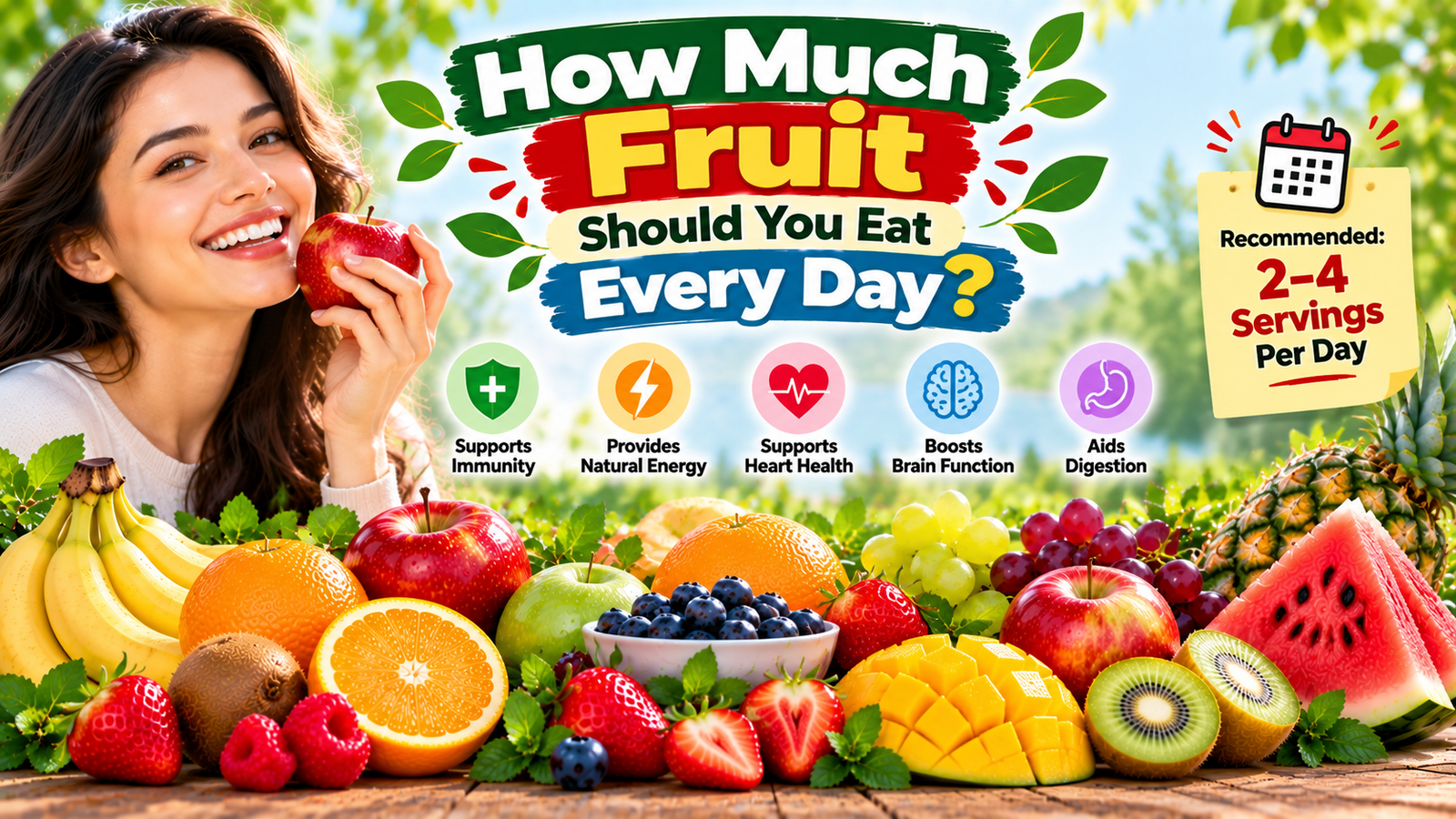
Fruit is one of the simplest foods to include in a healthy and balanced diet. It is naturally sweet, refreshing, and provides important nutrients such as dietary fiber, vitamins, minerals, water, and various plant compounds. But one question I often think about is how much fruit should you eat every day?
There is no single amount that works perfectly for everyone. The ideal amount can depend on age, activity level, overall diet, and individual nutritional needs. Still, understanding general recommendations can make it much easier to build healthy eating habits.
In my view, the best approach is to enjoy a variety of whole fruits regularly rather than worrying too much about reaching a perfect number every single day.
Why Should You Eat Fruit Every Day?
Fruit provides many nutrients that are important for a balanced diet.
Different fruits contain different combinations of vitamins, minerals, fiber, and plant compounds. For example, oranges are known for vitamin C, bananas provide potassium, berries provide fiber and various plant compounds, and avocados provide fiber and unsaturated fats.
Fruit can also be a convenient alternative to highly processed snacks.
Instead of reaching for candy, cookies, or a sugary drink, you can choose an apple, orange, pear, or handful of berries.
Eating fruit regularly is therefore not only about individual nutrients. It is also about replacing less nutritious choices with foods that provide more nutritional value.
How Much Fruit Do You Need?
General dietary guidance often recommends making fruits and vegetables a significant part of your overall diet. The exact amount of fruit can vary depending on your individual calorie and nutrient needs.
For many adults, around 1.5 to 2 cups of fruit per day is a useful general target within a balanced diet.
However, this should not be treated as a strict rule for everyone.
Some people may need more or less depending on their age, activity level, dietary pattern, and other factors.
The important thing is to regularly include fruit while also eating vegetables, whole grains, protein foods, and healthy fats.
What Counts as One Cup of Fruit?
Understanding serving sizes can make the recommended amount easier to visualize.
In general, one cup of fruit can mean:
One cup of fresh fruit
One cup of frozen fruit
One cup of canned fruit with little or no added sugar
One half cup of dried fruit can also count as approximately one cup of fruit because dried fruit is more concentrated.
For larger fruits, one cup may be part of a whole fruit.
For example, a medium apple or orange can provide a substantial serving of fruit.
The exact amount can vary depending on the fruit and serving size.
Whole Fruit Is Usually the Best Choice
When I think about getting enough fruit every day, I prefer whole fruit.
Whole fruit provides fiber along with its natural sugars, water, vitamins, minerals, and plant compounds.
For example, eating a whole orange provides fiber that is reduced or removed in many juice products.
Whole fruit also takes longer to eat and can be more satisfying than drinking fruit juice.
This does not mean fruit juice is automatically unhealthy. However, it is generally easier to consume large amounts of fruit sugar through juice because drinking is faster than eating whole fruit.
Can You Eat Too Much Fruit?
Fruit is nutritious, but eating very large amounts of any food can contribute more calories than you need.
Some fruits, particularly dried fruits, are relatively concentrated sources of natural sugar and calories.
For example, it is much easier to eat a large handful of raisins quickly than it is to eat the same amount of grapes.
This does not mean you need to avoid dried fruit. It simply means portion size matters.
If you enjoy fruit several times a day, focus on variety and reasonable portions.
Does Eating Fruit Make You Gain Weight?
There is a common concern that eating fruit can automatically cause weight gain because fruit contains natural sugar.
In reality, whole fruits can fit very well into a balanced diet.
They provide fiber and water, which can make them filling. They are also generally less energy dense than many highly processed snacks and desserts.
Weight management depends on overall eating patterns, physical activity, and total energy intake rather than one particular food.
Instead of avoiding fruit because it contains natural sugar, I prefer focusing on the overall quality and balance of the diet.
Best Time to Eat Fruit
There is no universal rule saying that fruit must be eaten at a particular time.
You can enjoy fruit at breakfast, lunch, dinner, or between meals.
For example, you can add berries to oatmeal in the morning, eat an apple during the afternoon, or enjoy some watermelon with an evening meal.
What matters more is your overall dietary pattern.
I personally find fruit especially useful as a snack because it is easy to prepare and naturally sweet.
Eating Different Fruits Is Better Than Eating Only One
One habit I recommend is rotating your fruit choices.
Instead of eating the same fruit every day, try different options throughout the week.
You might have:
Apples
Bananas
Oranges
Pears
Mangoes
Berries
Kiwi
Papaya
Watermelon
Pomegranate
Different fruits provide different combinations of nutrients and plant compounds.
A colorful fruit bowl is an easy way to encourage variety.
How to Add More Fruit to Your Day
If you currently eat very little fruit, you do not need to make a dramatic change.
Start with one serving a day.
You can add a banana to breakfast or eat an apple as an afternoon snack.
Once that becomes a habit, add another serving when it fits comfortably into your diet.
Another useful strategy is to keep fruit visible and easily accessible. If apples, oranges, bananas, or other fruits are ready to eat, you are more likely to choose them.
Fruit at Breakfast
Breakfast is an easy opportunity to include fruit.
You can add berries to oatmeal, slice a banana over whole grain cereal, or eat an orange alongside your regular breakfast.
Plain yogurt with berries and a small amount of nuts can also make a balanced breakfast or snack.
Adding fruit to breakfast can provide natural sweetness without relying heavily on added sugar.
Fruit as a Healthy Snack
Fruit is one of the easiest foods to use as a snack.
An apple, pear, banana, or orange can usually be eaten without much preparation.
For a more filling snack, combine fruit with another nutritious food.
For example:
Apple with unsweetened peanut butter
Berries with plain yogurt
Banana with nuts
Pear with cottage cheese
These combinations provide a wider range of nutrients and may keep you satisfied for longer.
Fresh, Frozen, and Canned Fruit
You do not always have to eat fresh fruit.
Frozen fruit can be an excellent option, especially when certain fruits are out of season.
Canned fruit can also fit into a healthy diet. When buying canned fruit, look for options packed in water or natural juice rather than products with large amounts of added sugar.
The important thing is to choose forms that help you eat more fruit without unnecessary added ingredients.
What About Dried Fruit?
Dried fruits such as raisins, dates, apricots, and prunes can provide fiber and other nutrients.
However, the water has been removed, making dried fruit much more concentrated.
Because of this, portion sizes are usually smaller than for fresh fruit.
I like using dried fruit as an occasional snack or adding a small amount to oatmeal, yogurt, or homemade trail mix.
What About Fruit for Children?
Children also benefit from eating a variety of fruits, but their needs are different from adults.
Younger children generally need smaller portions than teenagers or adults.
Parents can make fruit more appealing by offering different colors, textures, and varieties.
Cutting fruit into appropriate sizes and shapes can also make it easier for children to eat.
For very young children, parents should follow age appropriate feeding and choking safety guidance.
People With Specific Dietary Needs
Although fruit is a healthy food for most people, some individuals may need to pay closer attention to their intake.
People with certain medical conditions, food intolerances, or specific dietary requirements may need personalized advice.
For example, people with diabetes do not necessarily need to avoid fruit, but portion sizes and overall carbohydrate intake may need to be considered as part of their individual eating plan.
If you have a medical condition or are unsure how much fruit is appropriate for you, speaking with a qualified healthcare professional can provide more personalized guidance.
My Simple Approach to Daily Fruit
I do not think healthy eating needs to become complicated.
A simple approach is to aim for fruit with breakfast, fruit as a snack, or fruit alongside one of your main meals.
You can rotate different fruits throughout the week and choose whatever is fresh, affordable, and enjoyable.
For example, a simple day might include berries with breakfast, an apple during the afternoon, and some orange or melon with another meal.
This approach provides variety without making your diet feel restrictive.
Final Thoughts
So, how much fruit should you eat every day? For many adults, around 1.5 to 2 cups of fruit per day can be a useful general target, but individual needs vary.
From my point of view, the exact number is less important than building a consistent habit of eating a variety of whole fruits.
Choose apples, bananas, oranges, berries, pears, mangoes, kiwi, watermelon, papaya, or other fruits that you enjoy. Eat them fresh when possible, but do not be afraid to use frozen or appropriately chosen canned fruit when convenient.
The most important thing is balance. Fruit should be one part of a varied diet that also includes vegetables, whole grains, protein sources, healthy fats, and enough fluids.
Instead of asking yourself whether you are eating the perfect amount of fruit every day, focus on making fruit a regular and enjoyable part of your meals and snacks. Over time, these simple habits can make a healthy diet much easier to maintain.