
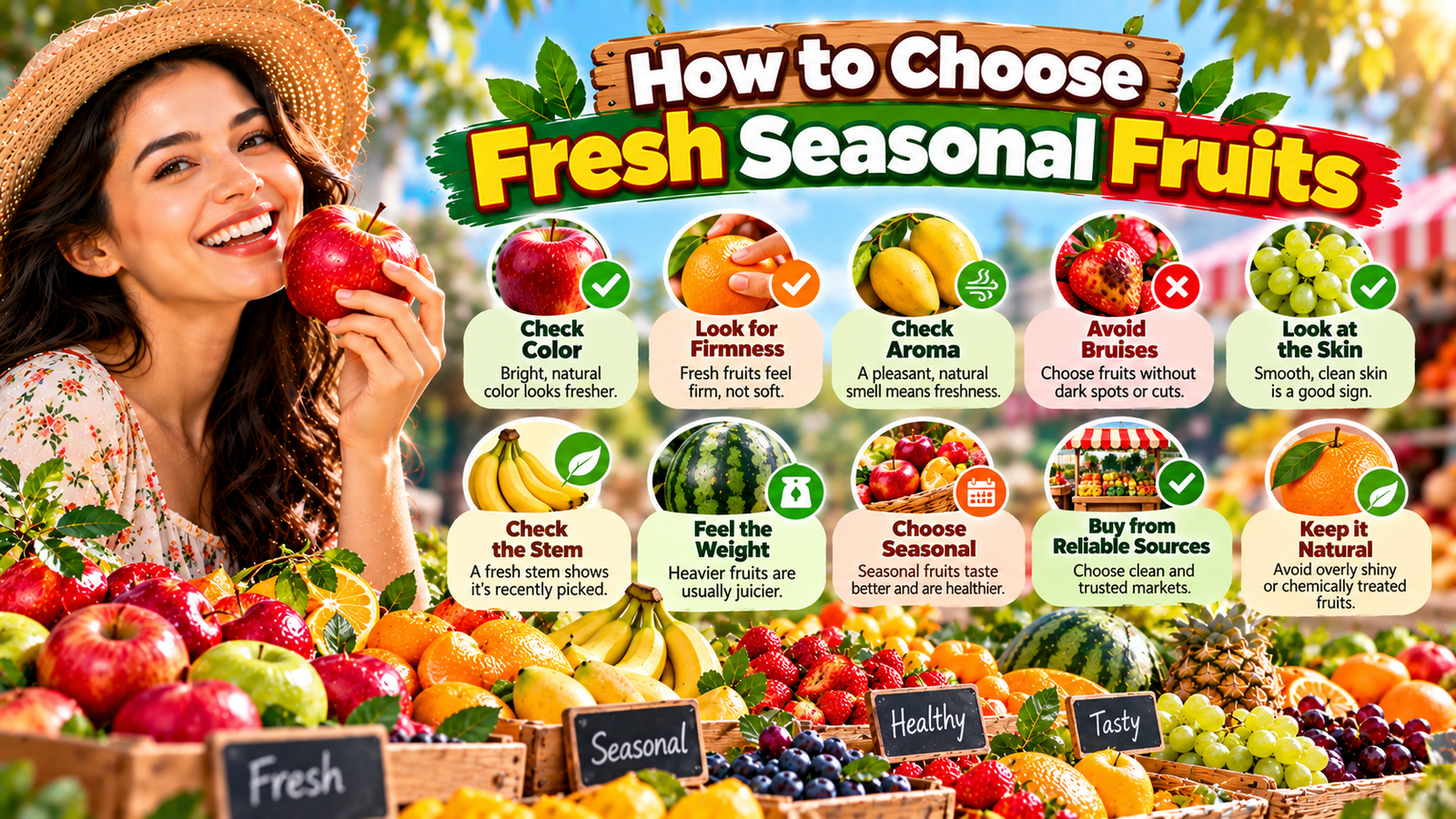
Choosing fresh seasonal fruits is one of the easiest ways to enjoy better flavor, natural sweetness, and variety in your daily diet. In my opinion, fruit tastes best when it is fresh, ripe, and naturally available during its growing season. However, knowing how to choose good fruit can sometimes be confusing, especially when different fruits have different signs of freshness.
A fruit can look attractive from the outside but still be underripe, overripe, or lacking in flavor. That is why I prefer checking several things before buying fruit, including its appearance, smell, firmness, weight, and overall condition.
Seasonal fruits are also worth exploring because they give us a chance to enjoy different flavors throughout the year. Instead of buying the same fruits every month, we can choose fruits that are naturally available during spring, summer, autumn, or winter.
In this article, I will explain how to choose fresh seasonal fruits and share simple tips that can help you make better choices when shopping.
Why Choose Seasonal Fruits?
Seasonal fruits are fruits that are naturally harvested during a particular time of year. Their availability depends on the local climate, growing conditions, and variety of the fruit.
One reason I like seasonal fruits is their flavor. When fruit is naturally ripe and available during its normal season, it can have a better aroma, texture, and sweetness.
Seasonal fruits can also add variety to meals. Summer may bring mangoes, watermelon, peaches, and melons, while winter can offer oranges, mandarins, guava, and other fruits.
Availability can also affect price. When a fruit is plentiful in local markets, it may be easier to find and sometimes more affordable.
Check the Overall Appearance
The first thing I usually check when buying fruit is its appearance. Fresh fruit should generally look healthy and suitable for its variety.
Look for fruits that have their natural color and avoid those with large areas of bruising, mold, leaking juice, or deep cuts.
However, perfect appearance does not always mean perfect quality. Some naturally good fruits may have small marks or slight changes in color.
I try to focus more on the overall condition rather than expecting every piece of fruit to look perfect.
Smell the Fruit
Smell can be a useful way to judge the ripeness of many fruits.
Fruits such as mangoes, melons, peaches, pears, and pineapples often develop a noticeable sweet aroma as they become ripe.
If a fruit has a pleasant natural smell, it can be a good indication that it is ready to eat or close to ripeness.
On the other hand, a strong fermented or unpleasant smell may indicate that the fruit is overripe or beginning to spoil.
Of course, not every fruit has a strong aroma, so smell should be considered along with other signs.
Feel the Firmness
Firmness is another important factor when choosing fresh seasonal fruit.
Some fruits should be firm when purchased, while others are better when they have a slight softness.
For example, a ripe peach or mango may feel slightly soft when gently pressed. An apple should generally feel firm. A watermelon should have a solid outer surface.
I recommend pressing fruit gently rather than squeezing it hard. Excessive pressure can damage the fruit and create bruised areas.
Consider the Weight
For some fruits, weight can provide useful information about freshness and moisture content.
When choosing between similar sized watermelons, melons, oranges, or other juicy fruits, a fruit that feels relatively heavy for its size may contain a good amount of moisture.
This is not a perfect method because different varieties naturally have different weights, but it can be useful when combined with appearance and firmness.
How to Choose Fresh Mangoes
Mangoes are popular seasonal fruits, especially during warmer months. When choosing mangoes, I usually pay attention to smell and firmness rather than relying only on skin color.
A ripe mango often has a sweet aroma near the stem. Depending on the variety, the skin can remain green even when the fruit is ripe.
Gently press the mango with your fingers. If it gives slightly without feeling mushy, it may be ready to eat.
If you want to store mangoes for a few days, choosing slightly firm ones can give them more time to ripen at home.
How to Choose Fresh Watermelon
When buying watermelon, I look for a firm fruit without major cracks, soft areas, or damaged skin.
The fruit should feel heavy for its size because watermelon contains a large amount of water.
A creamy yellow field spot can also be a useful sign that the watermelon rested on the ground while growing. However, no single sign can guarantee that a watermelon will be perfectly sweet.
Buying watermelon from a reliable seller and choosing fruit that looks healthy is usually a practical approach.
How to Choose Fresh Apples
Apples should generally feel firm and heavy for their size. I avoid apples that have large bruises, soft spots, or damaged skin.
A fresh apple usually has a pleasant smell and firm flesh.
Different varieties naturally have different colors, so I do not judge quality only by skin color.
Apples can usually be stored for a reasonable amount of time when kept properly, which makes them a convenient fruit to buy in larger quantities.
How to Choose Oranges and Mandarins
When choosing oranges or mandarins, I usually pick fruits that feel firm and relatively heavy for their size.
The skin should not have extensive soft spots, mold, or leaking areas.
A pleasant citrus aroma can also indicate freshness.
Mandarins are often easier to peel and can be a convenient snack, especially when you want fruit that requires little preparation.
How to Choose Fresh Pineapple
Pineapples can be more difficult to judge because their outer appearance does not always show the condition of the inside.
I usually look for a pineapple that feels firm but not extremely hard and has a pleasant smell near the base.
The skin should not have large areas of mold or excessive softness.
A fresh pineapple should smell sweet and tropical rather than fermented.
Once cut, pineapple should be stored in a covered container in the refrigerator and consumed within a reasonable period.
How to Choose Berries
Berries such as strawberries, blueberries, and other small fruits can spoil faster than many other fruits.
When buying berries, I check the container carefully for mold, excessive moisture, leaking juice, or crushed fruit.
For strawberries, look for bright color, fresh green leaves, and firm texture.
I usually avoid containers with even a small amount of visible mold because mold can spread between soft fruits.
How to Choose Fresh Bananas
Bananas are easy to judge based on their skin color and firmness.
Green bananas are less ripe and generally firmer. Yellow bananas are usually ready to eat, while bananas with brown spots are softer and sweeter.
I often buy bananas at different stages of ripeness so that I can eat them over several days.
Very ripe bananas do not need to be wasted. They can be used in smoothies, oatmeal, or homemade banana bread.
Seasonal Fruit Shopping Tips
One of the best ways to choose fresh seasonal fruits is to shop according to what is naturally available in your area.
Before shopping, I like to check what fruits are currently in season. Local markets can be especially useful because seasonal produce is often easier to find there.
Buying smaller quantities can also reduce food waste. There is little benefit in buying a large amount of fruit if you cannot eat it before it becomes overripe.
I also recommend buying a mixture of ripe and slightly underripe fruits. This gives you fruit that can be eaten immediately as well as fruit that will ripen over the next few days.
Do Not Judge Fruit Only by Appearance
One mistake I think many people make is choosing fruit only because it looks perfect.
Natural fruits can have small marks, unusual shapes, or minor changes in color without being poor quality.
Instead of looking for perfect fruit, I recommend checking for signs of spoilage. Avoid fruit with mold, strong unpleasant odors, leaking juice, deep soft areas, or significant damage.
Good fruit does not always look perfect.
Buy From Reliable Sellers
Where you buy fruit can also make a difference. A clean and well managed market or grocery store can make it easier to find fresh produce.
I personally prefer sellers who regularly rotate their stock and keep fruits properly displayed.
If you frequently buy from the same market, you may also learn which sellers usually have better seasonal produce.
Store Fruit Properly After Shopping
Choosing fresh fruit is only the first step. Proper storage can help maintain its quality.
Some fruits should remain at room temperature while they ripen. Once ripe, many can be moved to the refrigerator to slow further ripening.
Keep cut fruits in clean, covered containers and refrigerate them promptly.
I also try to keep fruits away from excessive moisture when appropriate, especially delicate berries, because moisture can encourage spoilage.
Buy What You Can Eat
One of my most useful fruit shopping habits is buying according to actual consumption.
It can be tempting to purchase large quantities when seasonal fruits are available, but buying too much can lead to unnecessary food waste.
I prefer buying enough fruit for several days and then shopping again when necessary.
This approach helps me enjoy fruit when it is fresh rather than allowing it to become overripe in the kitchen.
Final Thoughts
Knowing how to choose fresh seasonal fruits does not have to be complicated. By checking appearance, smell, firmness, weight, and overall condition, you can make better choices when shopping.
Different fruits require different methods. Mangoes and peaches can be judged partly by softness and aroma, apples should generally feel firm, watermelons should feel heavy for their size, and berries should be checked carefully for mold and moisture.
In my opinion, the most important thing is to understand that every fruit has its own natural signs of ripeness. With a little practice, choosing fresh seasonal fruit becomes much easier.
I also recommend buying fruits that are currently in season, purchasing reasonable quantities, and storing them properly at home. These simple habits can help you enjoy better tasting fruit while reducing food waste and adding more variety to your everyday meals.


