
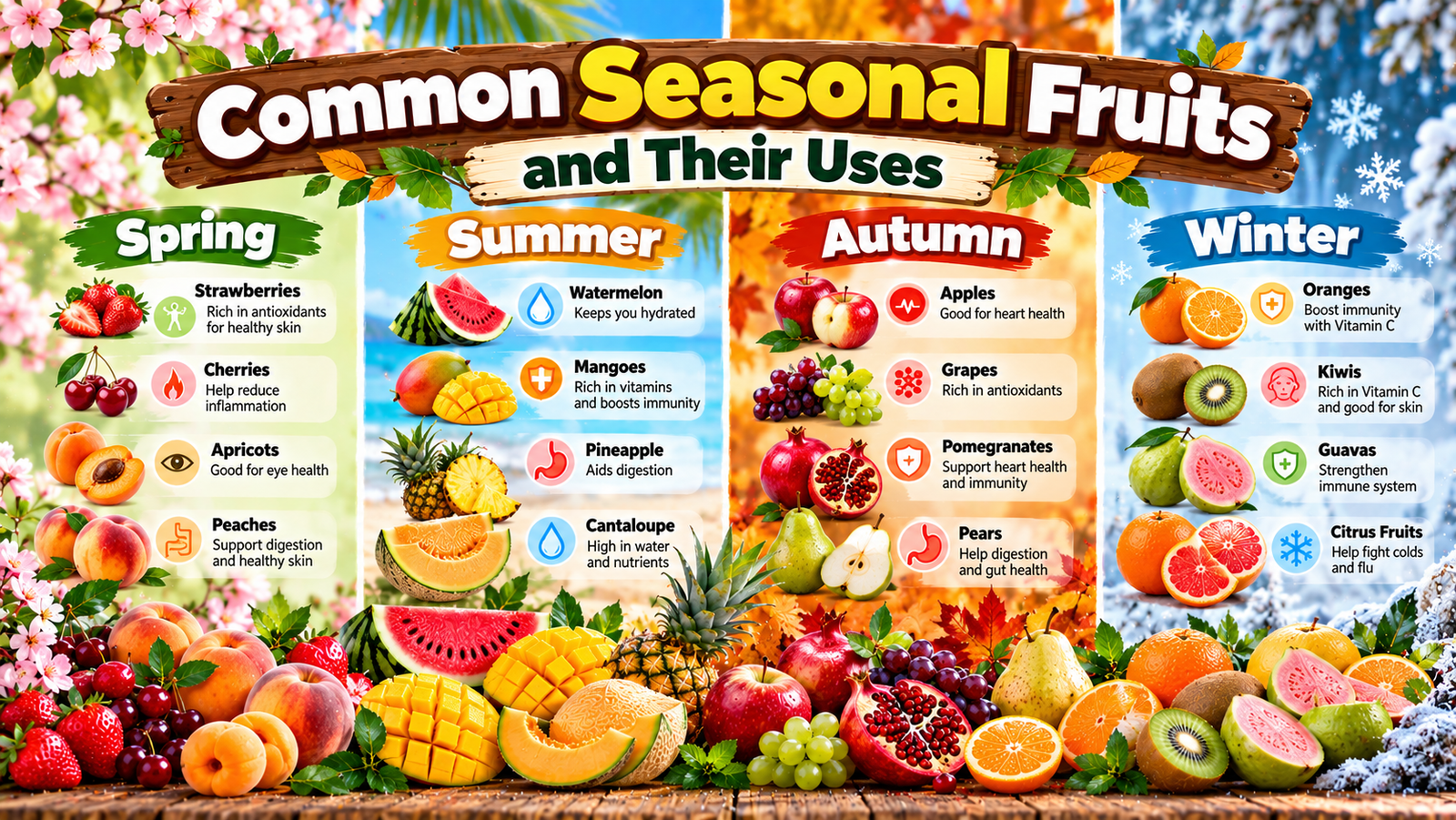
Seasonal fruits are one of the simplest ways to enjoy fresh, flavorful, and naturally nutritious foods throughout the year. I personally like seasonal fruits because they usually taste better when they are naturally available, and there is always something different to enjoy as the seasons change. From juicy summer mangoes to refreshing winter oranges, every season brings its own selection of fruits.
Eating seasonal fruits can also make a healthy diet more interesting. Instead of buying the same fruits throughout the year, we can choose fruits that are naturally available during a particular season. This gives us more variety and allows us to experiment with different flavors, recipes, and snacks.
In this article, I will discuss some common seasonal fruits, their uses, and simple ways to include them in everyday meals.
Why Seasonal Fruits Are Worth Trying
Seasonal fruits are harvested when their growing conditions are suitable. Temperature, sunlight, rainfall, and soil conditions all influence when different fruits grow best.
One of the main reasons I prefer seasonal fruit is flavor. A ripe fruit that is naturally in season can have a much better taste and aroma than fruit that has been stored for a long time.
Seasonal fruits can also provide variety. Different fruits contain different amounts of fiber, vitamins, minerals, and plant compounds, so eating a range of fruits can help create a more balanced diet.
Another benefit is that seasonal fruits are often easier to find in local markets when they are at their peak. Depending on your location, this can sometimes make them a practical and affordable choice.
Spring Seasonal Fruits
Spring is a refreshing time of year, and many fruits begin appearing in markets as the weather becomes warmer.
Strawberries
Strawberries are one of my favorite spring fruits because they are juicy, colorful, and naturally sweet. They can be eaten fresh, sliced into yogurt, added to oatmeal, or mixed into fruit salads.
They are also useful for homemade smoothies and simple desserts.
Apricots
Apricots have a soft texture and a sweet, slightly tangy flavor. Fresh apricots can be eaten as a snack or added to fruit bowls.
They can also be used in homemade jams, sauces, and desserts.
Cherries
Cherries are another popular seasonal fruit that can be enjoyed fresh. I like eating them chilled as a simple snack.
They can also be added to yogurt, oatmeal, fruit salads, and homemade desserts.
Summer Seasonal Fruits
Summer is probably the most exciting season for fruit lovers. Many juicy and refreshing fruits become widely available during hot weather.
Mangoes
Mangoes are among the most popular summer fruits in many warm regions. Their sweet flavor and soft texture make them easy to enjoy.
Fresh mango can be eaten alone, added to fruit salads, blended into smoothies, or mixed with yogurt. Mangoes can also be used in homemade desserts and refreshing drinks.
I usually prefer eating ripe mango as a whole fruit because it provides the full texture and natural flavor.
Watermelon
Watermelon is one of the most refreshing summer fruits. It contains a high amount of water, making it especially enjoyable during hot weather.
It can be sliced and served chilled, added to fruit salads, or blended into a refreshing homemade drink.
Peaches
Peaches have a soft texture and sweet flavor. They are excellent as a simple summer snack and can also be added to yogurt or oatmeal.
Sliced peaches can also be used in homemade fruit salads and desserts.
Plums
Plums can range from sweet to slightly tart depending on the variety. They are easy to eat and require little preparation.
I like keeping a few plums available for a quick snack when I want something naturally sweet.
Melons
Cantaloupe and honeydew are popular summer melons. They are juicy and refreshing and can be served chilled.
Melons work well in fruit salads, breakfast bowls, and smoothies.
Autumn Seasonal Fruits
Autumn brings a different selection of fruits, including apples, pears, grapes, and pomegranates.
Apples
Apples are among the most versatile fruits. They can be eaten fresh, sliced into salads, added to oatmeal, or used in homemade recipes.
I find apples especially convenient because they are easy to carry and do not require much preparation.
Pears
Pears have a soft, juicy texture when ripe and can be eaten fresh or added to breakfast dishes.
Sliced pears work well with yogurt, oatmeal, and fruit salads. They can also be baked for a simple homemade dessert.
Grapes
Grapes are convenient because they can be washed and eaten without cutting or peeling.
They can be enjoyed as a snack, added to fruit salads, or chilled for a refreshing treat.
Pomegranates
Pomegranates are known for their colorful seeds and slightly sweet, tangy flavor.
The seeds can be eaten alone or sprinkled over yogurt, salads, and breakfast bowls. They can also be used as a colorful topping for homemade dishes.
Winter Seasonal Fruits
Winter brings several citrus fruits and other nutritious choices.
Oranges
Oranges are one of the most common winter fruits. They are juicy, refreshing, and naturally sweet with a slightly tangy taste.
I usually eat oranges fresh rather than drinking them as juice. They are also useful for adding flavor to fruit salads and homemade desserts.
Mandarins
Mandarins are similar to oranges but are often smaller and easier to peel. This makes them a convenient snack.
They can be packed for school, work, or travel and eaten without much preparation.
Guava
Guava is an excellent fruit for people who enjoy a slightly crunchy texture. Depending on the variety, it may have white, pink, or reddish flesh.
Guava can be eaten fresh, sliced into fruit salads, or used in homemade drinks.
Kiwi
Kiwi has a unique combination of sweet and tangy flavors. It can be sliced and eaten with a spoon or peeled and added to fruit salads.
I also like using kiwi in smoothies and breakfast bowls.
Bananas Can Be Enjoyed Throughout the Year
Bananas are technically tropical fruits, and depending on the region, they may be available for much of the year. They deserve a place on this list because they are one of the easiest fruits to use at home.
Bananas are excellent for breakfast, snacks, smoothies, oatmeal, and homemade baked recipes.
When bananas become very ripe, I prefer using them in smoothies or homemade banana bread instead of throwing them away.
Common Uses of Seasonal Fruits
There are many ways to use seasonal fruits beyond simply eating them fresh.
Fresh Snacks
The easiest use is as a quick snack. Washing and cutting fruit ahead of time can make it easier to choose fruit instead of highly processed snacks.
Breakfast
Fruit can be added to oatmeal, cereal, yogurt, toast, or homemade breakfast bowls.
I particularly enjoy adding bananas, berries, apples, or mangoes to breakfast because they add natural sweetness.
Fruit Salads
Combining seasonal fruits is a simple way to create a colorful fruit salad. I recommend choosing fruits with different textures and flavors.
For example, you can combine apples, grapes, oranges, and pomegranate seeds for a refreshing bowl.
Smoothies
Seasonal fruits can also be blended into homemade smoothies. Bananas provide creaminess, while fruits such as strawberries, mangoes, pineapple, and oranges provide flavor.
I prefer making smoothies at home so I can control the ingredients and avoid unnecessary added sugar.
Homemade Desserts
Fruits can be used in many simple desserts. Apples and pears can be baked, berries can be added to yogurt, and mangoes can be used in homemade chilled desserts.
Using fruit as part of a dessert can add natural sweetness and flavor.
Homemade Drinks
Some seasonal fruits can be blended with water to create refreshing drinks. However, I prefer keeping the fruit pulp when possible because whole fruit contains fiber.
If making a fruit drink, there is usually no need to add a lot of sugar because ripe fruit is already naturally sweet.
How to Choose Good Seasonal Fruits
When buying seasonal fruits, I usually look at their appearance, smell, firmness, and ripeness.
Different fruits have different signs of freshness. A ripe mango may smell sweet and feel slightly soft, while a good apple should generally feel firm.
It is also important to avoid fruits with excessive bruising, mold, or damaged areas.
Buying smaller amounts more frequently can be useful if you do not eat fruit quickly. This helps reduce food waste and allows you to enjoy fruit closer to its ideal freshness.
How to Store Seasonal Fruits
Storage depends on the type of fruit. Some fruits need to ripen at room temperature, while others can go directly into the refrigerator.
Once fruit is cut, I recommend keeping it in a clean, covered container in the refrigerator.
Berries should generally be handled carefully because excess moisture can make them spoil faster. Washing them close to the time you plan to eat them can help maintain their quality.
Final Thoughts
Common seasonal fruits give us an easy way to add more variety to our everyday diet. Spring can bring strawberries and cherries, summer offers mangoes, watermelon, peaches, and melons, autumn provides apples, pears, grapes, and pomegranates, while winter brings oranges, mandarins, guava, and kiwi.
In my opinion, the best way to enjoy seasonal fruits is to keep things simple. Eat them fresh, add them to breakfast, prepare colorful fruit salads, blend them into homemade smoothies, or use them in simple desserts.
Rather than focusing on one particular fruit, I prefer changing my choices with the seasons. This keeps meals interesting and gives me the opportunity to enjoy different flavors throughout the year.
Seasonal fruits are not complicated foods. They are convenient, versatile, and naturally flavorful, which makes them a practical choice for anyone who wants to build healthier and more varied eating habits.


