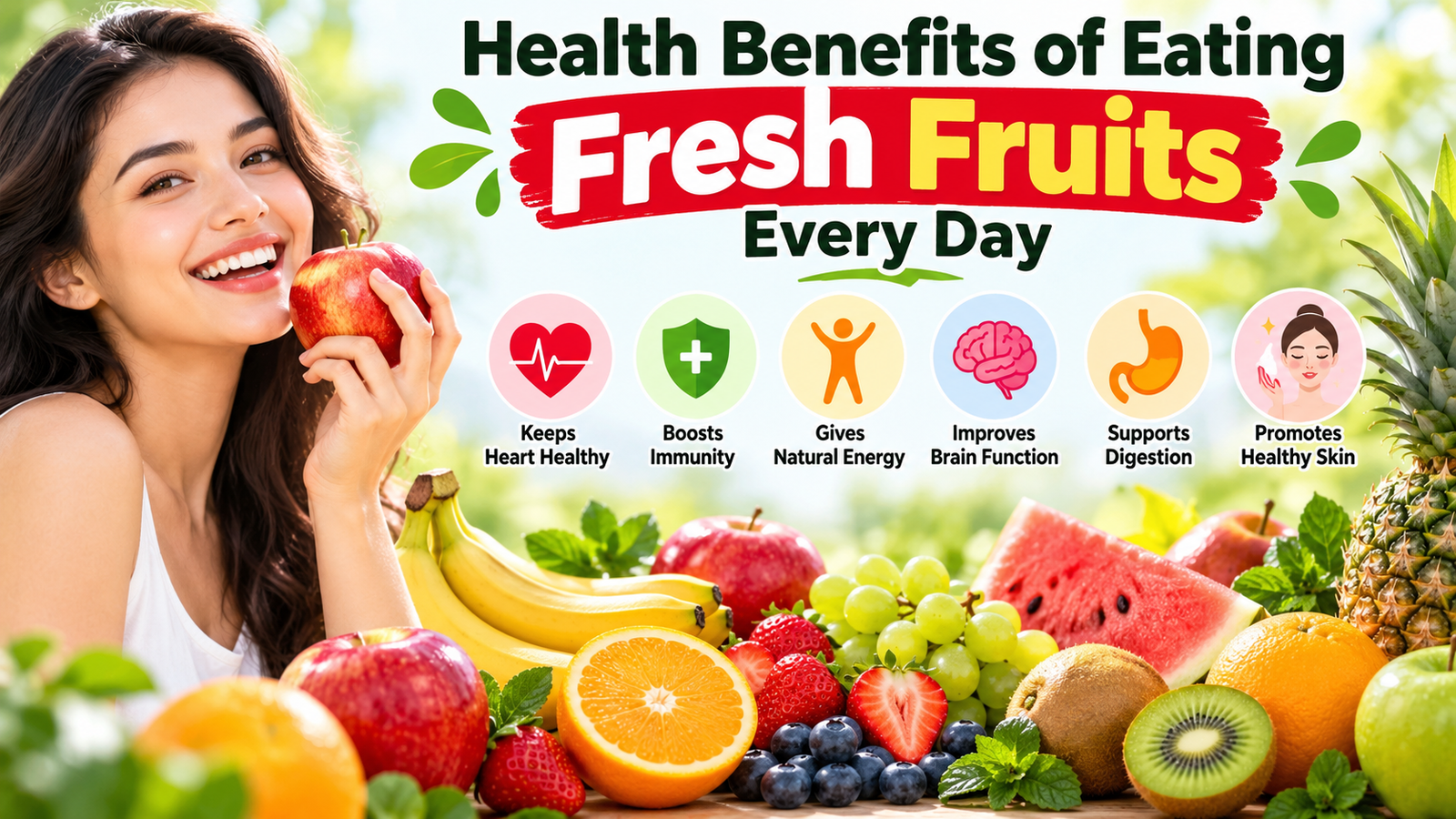
Eating fresh fruits every day is one of the simplest habits I believe we can add to a healthy lifestyle. Fruits are naturally delicious, refreshing, and available in many different varieties, so it is easy to include them in everyday meals. From apples and bananas to oranges, mangoes, berries, grapes, and guavas, each fruit provides a different combination of vitamins, minerals, fiber, and other useful nutrients.
In my view, healthy eating does not always need to be complicated. Small daily choices can make a meaningful difference over time, and eating fresh fruits regularly is one of those simple choices. Instead of depending heavily on processed snacks, adding fresh fruit to breakfast, lunch, or an afternoon snack can help make the overall diet more balanced.
In this article, I will discuss the important health benefits of eating fresh fruits every day and share some practical ways to make fruits a regular part of your daily routine.
Fruits Provide Important Nutrients
One of the main health benefits of fresh fruits is their nutritional value. Fruits contain many essential vitamins and minerals that the body needs for normal functions.
For example, oranges and other citrus fruits are well known for their vitamin C content. Bananas provide potassium, while fruits such as mangoes contain vitamins and beneficial plant compounds. Berries are also valued for their antioxidants.
The exact nutritional value depends on the fruit, which is why I believe eating a variety of fruits is better than always choosing the same one. Different fruits provide different nutrients, so variety can help create a more balanced diet.
Fresh Fruits Support Digestive Health
Another important benefit of eating fruit every day is the fiber they provide. Dietary fiber plays an important role in maintaining a healthy digestive system.
Many whole fruits contain both soluble and insoluble fiber. Fiber can help support regular bowel movements and contribute to normal digestive function. It can also help you feel satisfied after eating.
For people who do not eat enough fiber, gradually adding whole fruits to their meals can be a simple way to increase fiber intake. Apples, pears, oranges, berries, guava, and many other fruits can be useful choices.
It is also important to drink enough water throughout the day because fiber and proper hydration work together to support healthy digestion.
Fruits Can Support Heart Health
A diet that includes plenty of fruits can also be part of a heart healthy eating pattern. Fruits provide nutrients such as potassium and fiber, along with various plant compounds.
Potassium is an important mineral involved in normal muscle and nerve function, while adequate potassium intake is associated with healthy blood pressure in the context of an overall healthy diet.
I personally think this is one reason why replacing some highly processed snacks with whole fruits can be a smart everyday habit. Instead of reaching for a sugary snack every afternoon, having an apple, orange, banana, or a small bowl of berries can provide useful nutrients along with natural sweetness.
Fruits Are Rich in Antioxidants
Many fruits contain antioxidants and other plant compounds that help protect cells from oxidative stress. Different fruits contain different compounds, which is another reason to eat a colorful variety.
Berries, grapes, citrus fruits, and many other colorful fruits contain naturally occurring plant compounds. The colors of fruits often reflect the different types of beneficial compounds they contain.
Rather than focusing on one so called superfruit, I believe it is more practical to enjoy different fruits throughout the week. This makes healthy eating more interesting while also providing a wider range of nutrients.
Eating Fruit May Help With Weight Management
Fresh fruits can also be helpful for people trying to maintain a healthy weight. Whole fruits generally contain water and dietary fiber, which can contribute to feelings of fullness.
When I am thinking about healthy snacking, whole fruit is one of the easiest options because it usually requires little preparation. An apple, banana, orange, or pear can be taken to work, school, or while traveling.
Of course, fruit alone does not guarantee weight loss. Overall eating habits, physical activity, sleep, and portion sizes all matter. However, replacing some high calorie processed snacks with whole fruits can be a useful part of a balanced lifestyle.
Fruits Can Help Keep the Body Hydrated
Many fresh fruits contain a significant amount of water. Watermelon, oranges, strawberries, peaches, and similar fruits can contribute to daily fluid intake.
Drinking enough water remains important, but foods with high water content can also contribute to hydration.
This can be especially useful during hot weather when people may naturally need more fluids. A refreshing fruit snack can provide both fluids and nutrients, although it should not replace regular water consumption.
Fruits Provide Natural Energy
Fruits contain naturally occurring carbohydrates, including natural sugars, which provide energy for the body. This makes fruit a convenient choice before physical activity or as part of a balanced snack.
Bananas are particularly popular among people who exercise because they are convenient and provide carbohydrates and potassium. Other fruits can also provide carbohydrates that the body can use for energy.
I prefer thinking of fruit as a whole food rather than simply focusing on its sugar content. Whole fruit comes with fiber, water, vitamins, minerals, and plant compounds, making it different from many processed foods that contain added sugars.

Fruits Support a Balanced Diet
A healthy diet is usually about the overall pattern rather than one individual food. Fresh fruits can fit naturally into a balanced diet that also includes vegetables, whole grains, protein sources, healthy fats, and adequate fluids.
For example, fruit can be added to oatmeal at breakfast, served with yogurt as a snack, or included in a fresh salad. This makes it easier to eat fruit without feeling like you have to completely change your normal meals.
I find that simple habits are easier to maintain than complicated diets. Keeping a few different fruits available at home can make choosing a healthier snack much easier.
Fruits Can Make Healthy Eating More Enjoyable
Healthy eating should not feel boring. Fresh fruits come in different flavors, textures, colors, and aromas, which makes them enjoyable to eat.
Some people prefer sweet fruits such as mangoes and bananas, while others enjoy citrus fruits or berries. There are also fruits with more refreshing or mildly sour flavors.
Trying seasonal fruits can make healthy eating more interesting. Seasonal produce may also be easier to find and can introduce you to fruits you do not normally buy.
Whole Fruit Is Usually Better Than Fruit Juice
When discussing the health benefits of eating fresh fruits every day, it is important to distinguish whole fruit from fruit juice.
Whole fruits contain fiber that may be reduced or removed during juicing. It is also easier to consume a large amount of fruit sugar quickly when drinking juice than when eating whole fruit.
For everyday eating, I would generally choose whole fruit whenever possible. Fresh fruit can be eaten as it is, added to meals, or combined with other nutritious foods.
Fruit juice can still be included occasionally, but it should not be considered a complete replacement for whole fruits.
How Many Fruits Should You Eat Every Day?
There is no single number that is perfect for every person because fruit needs can vary depending on age, activity level, overall diet, and individual nutritional requirements.
Instead of becoming overly focused on a specific number, I think it is more useful to make fruits a regular part of daily meals. Choosing different fruits throughout the week can help improve dietary variety.
A simple approach is to include fruit with breakfast and have another serving as a snack. You can adjust your choices according to your overall diet and nutritional needs.
Best Ways to Add More Fruit to Your Diet
Adding fresh fruit to your daily routine does not need to be difficult. Here are some simple ideas I find practical.
Start your morning with a banana, apple, orange, or berries.
Add sliced fruit to oatmeal or whole grain cereal.
Keep washed fruit where you can easily see it.
Take an apple, pear, or banana with you when leaving home.
Add fresh fruit to plain yogurt.
Prepare a simple fruit salad using several seasonal fruits.
Choose whole fruit instead of highly processed sweet snacks when possible.
Try a different fruit each week to increase variety.
These small changes can gradually make eating fresh fruits a normal part of your lifestyle.
Choose a Variety of Colorful Fruits
One of my favorite ways to make fruit eating more interesting is to focus on variety. Instead of buying only one type of fruit, choose several colors and types.
For example, you could have bananas, oranges, apples, grapes, berries, and seasonal fruits during the week. Each type offers its own nutritional profile.
There is no need to make this complicated. Simply changing your fruit choices regularly can help you enjoy different flavors while providing a wider range of nutrients.
Wash Fresh Fruits Properly
Fresh fruits should be handled