

Growing papaya from seeds is an interesting and rewarding project for home gardeners. I personally like growing papaya because the process starts with something as simple as a few seeds from a ripe fruit and can eventually produce a tall plant with fresh tropical fruit. Papaya plants also grow relatively quickly when they receive warm temperatures, plenty of sunlight, suitable soil, and regular care.
Unlike many fruit trees, papaya is a fast growing plant that can produce fruit much sooner under favorable conditions. However, successful papaya growing requires patience and attention to the plant’s basic needs.
In this article, I will explain how to grow papaya from seeds at home, including collecting seeds, preparing them for planting, choosing the right location, watering, feeding, transplanting, protecting the plant, and encouraging fruit production.
Choose a Healthy Ripe Papaya
The first step is choosing a healthy, fully ripe papaya. I recommend selecting a fruit that is naturally ripe and free from obvious signs of mold or disease.
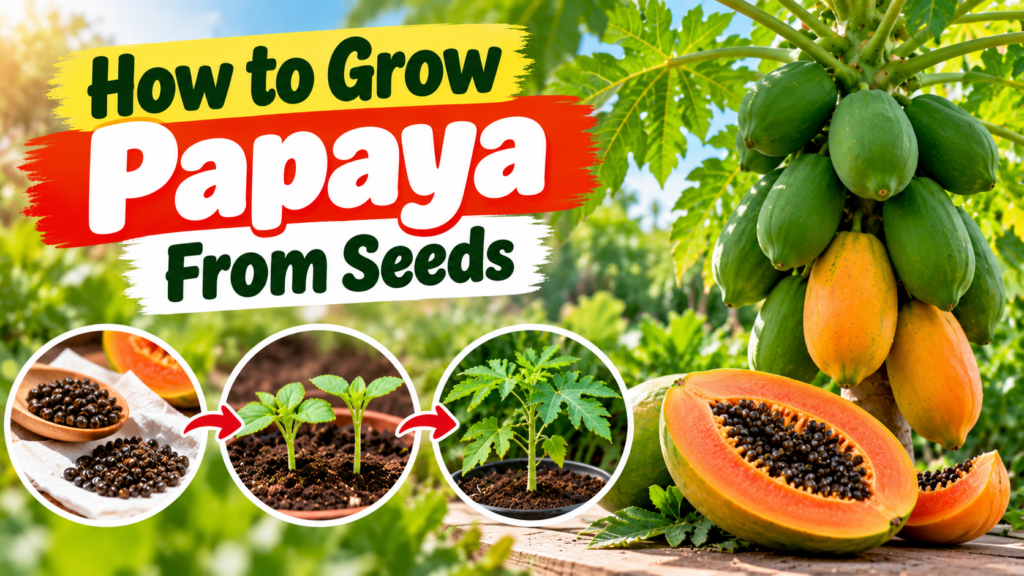
Once you cut the papaya open, you will find many small black seeds in the center. These seeds can be collected and prepared for planting.
Keep in mind that papaya plants grown from seed can vary in characteristics. The fruit produced may not be exactly the same as the papaya from which the seeds were collected.
Collect the Papaya Seeds
Remove the seeds from the center of the ripe papaya and place them in a clean container.
Papaya seeds are covered with a slippery outer coating. This coating can be removed by gently washing and rubbing the seeds.
Rinse the seeds thoroughly with clean water and remove as much of the surrounding pulp as possible.
After cleaning, allow the seeds to dry in a shaded, well ventilated place for a short period. Avoid exposing freshly cleaned seeds to excessive heat.
If you are not planting immediately, store the seeds in a cool and dry place. However, fresh seeds are often a convenient choice when starting a home growing project.
Choose the Right Growing Location
Papaya plants love warmth and sunlight. Choose a location that receives plenty of direct sunlight throughout the day.
A sunny location helps the plant produce strong growth and supports future flowering and fruit production.
Papaya also needs enough space because it can become a tall plant. Avoid placing it where it will interfere with buildings, power lines, or other structures as it grows.
In warm climates, papaya can grow successfully outdoors for much of the year. In cooler climates, growing papaya in a protected area may be necessary.
Prepare Good Soil
Papaya grows best in fertile, well drained soil. The roots do not perform well when they remain in standing water for long periods.
Before planting, I recommend improving the soil with mature compost or another suitable organic material.
Good soil should hold enough moisture for the plant while still allowing excess water to drain away.
If your garden soil is heavy or poorly drained, consider using a raised bed or another growing area with better drainage.
Plant Papaya Seeds
Papaya seeds can be planted directly into the garden or started in containers.
Fill a small container with quality potting mix and make a shallow planting hole. Place a few seeds in the soil and cover them lightly.
Water the soil gently after planting.
Keep the container in a warm location with plenty of indirect or filtered light while the seeds are germinating. Once seedlings appear, provide them with increasing amounts of sunlight.
Papaya seeds can take some time to germinate, so avoid disturbing the soil too frequently.
Keep the Soil Moist
Water is important during germination and early growth.
I recommend keeping the soil consistently moist but not saturated. Excessive moisture can encourage root problems and may cause seeds or young seedlings to rot.
Check the surface of the soil regularly. If the top layer begins to dry, water gently.
As the plant grows larger, it can tolerate some drying between watering, but young papaya plants should not be allowed to remain dry for extended periods.
Give Seedlings Enough Light
Once papaya seedlings emerge, they need good light to develop strong growth.
If seedlings receive too little light, they may become thin and weak.
Place containers near a bright sunny window if you are growing them indoors temporarily. If growing outdoors, gradually introduce young seedlings to stronger sunlight if they were started in a protected environment.
Good light is particularly important as the plant becomes established.
Thin the Seedlings
If you plant several papaya seeds in one container, more than one seedling may emerge.
Once the seedlings become large enough to handle, choose the healthiest plants and remove weaker or crowded seedlings.
I prefer keeping only the strongest seedlings because overcrowding can lead to competition for light, water, and nutrients.
If you have enough space, you can keep several healthy plants until you are more certain about their growth.
Transplant Papaya Seedlings Carefully
Papaya seedlings can be sensitive to root disturbance, so transplanting should be done carefully.
When the seedlings have developed several healthy leaves and the weather is warm, they can be moved to their permanent growing location.
Dig a hole large enough to accommodate the root system. Carefully remove the seedling from its container while keeping as much soil around the roots as possible.
Place it at approximately the same depth at which it was growing.
Water gently after transplanting and protect the young plant from extreme conditions while it becomes established.
Water Papaya Plants Properly
Papaya plants need regular moisture, particularly during active growth and fruit development.
I prefer deep watering around the base of the plant rather than repeatedly wetting the leaves.
The soil should remain reasonably moist but should not stay waterlogged.
During hot and dry weather, the plant may require more frequent watering. Mulching around the plant can help reduce moisture loss.
Keep mulch away from the main stem to prevent excessive moisture around the base.
Feed Your Papaya Plant
Papaya is a relatively fast growing plant and needs adequate nutrients.
Adding mature compost to the soil can provide organic matter and some nutrients. A suitable fruit or general purpose fertilizer can also be used when necessary.
Follow the fertilizer instructions carefully and avoid excessive application.
Regular feeding during active growth can support healthy leaves, stems, flowers, and fruit.
Healthy soil is important, so I prefer combining good soil preparation with sensible feeding rather than depending entirely on fertilizer.
Protect Papaya From Cold Weather
Papaya is a tropical plant and does not tolerate cold conditions well.
If temperatures become very low, young plants can suffer damage.
Gardeners in warm climates may be able to grow papaya outdoors year round. In cooler regions, plants may need protection during colder periods.
If your papaya is growing in a container, moving it to a protected location can sometimes make winter care easier.
Understand Papaya Flower Types
One interesting thing about growing papaya from seeds is that young plants can develop different flower types.
Some plants produce female flowers, some produce male flowers, and some can produce flowers that allow a single plant to produce fruit depending on the variety.
Because plants grown from seed can vary, growing more than one plant can sometimes increase the chance of successful fruit production.
Once the plants begin flowering, observe the flowers carefully and give the plants enough space and suitable growing conditions.
Encourage Fruit Production
For good fruit production, papaya needs warmth, sunlight, water, and nutrients.
Make sure the plant is not competing heavily with nearby trees or large plants.
Provide adequate moisture without keeping the soil constantly wet.
Pollinating insects may help with some types of papaya flowers. If fruit does not develop, the flower type and pollination requirements of the particular plant may be worth investigating.
Patience is important because fruit production depends on the variety, climate, growing conditions, and health of the plant.
Protect Papaya From Pests
Papaya plants can be affected by insects and other garden problems.
Regularly inspect the leaves, stems, and fruit for unusual spots, insects, discoloration, or damage.
Keeping the area around the plant clean can help reduce some problems.
If you find pests, identify them before using any treatment. Since papayas are edible fruit, only use treatments that are suitable for food crops and follow their instructions carefully.
Healthy plants with good sunlight, nutrition, and watering are often better able to tolerate minor pest problems.
When to Harvest Papaya
Papayas are generally ready to harvest when the fruit begins changing from green toward yellow or orange, depending on the variety.
If you plan to eat the fruit immediately, you can allow it to ripen further on the plant when conditions are suitable.
If you need to transport or store the fruit, it may be harvested earlier and allowed to continue ripening.
Use clean garden shears or a suitable knife to remove the fruit carefully. Avoid damaging the plant or nearby developing fruits.
Common Mistakes to Avoid
One common mistake is planting papaya seeds in heavy, poorly drained soil. Excess moisture around the roots can cause serious problems.
Another mistake is growing the plant in a location with insufficient sunlight.
Overwatering is also common. Papaya needs water, but it does not need permanently saturated soil.
I also recommend avoiding excessive fertilizer. Too much fertilizer can damage roots and create unbalanced growth.
Finally, remember that papaya plants grown from seeds can vary. Not every seedling will produce exactly the same type of fruit as the original papaya.
Final Thoughts
Learning how to grow papaya from seeds can be a rewarding experience for anyone who enjoys tropical gardening. The process is simple enough to begin with a ripe papaya, a few healthy seeds, suitable soil, and a warm sunny location.
Clean the seeds properly, plant them in fertile and well drained soil, provide regular moisture, and give the young plants plenty of sunlight. As they grow, pay attention to nutrition, drainage, temperature, pests, and available space.
In my opinion, one of the best parts of growing papaya from seeds is watching the plant develop from a tiny seed into a tall tropical plant. With patience and consistent care, your home garden can eventually provide fresh papayas that you grew yourself.


