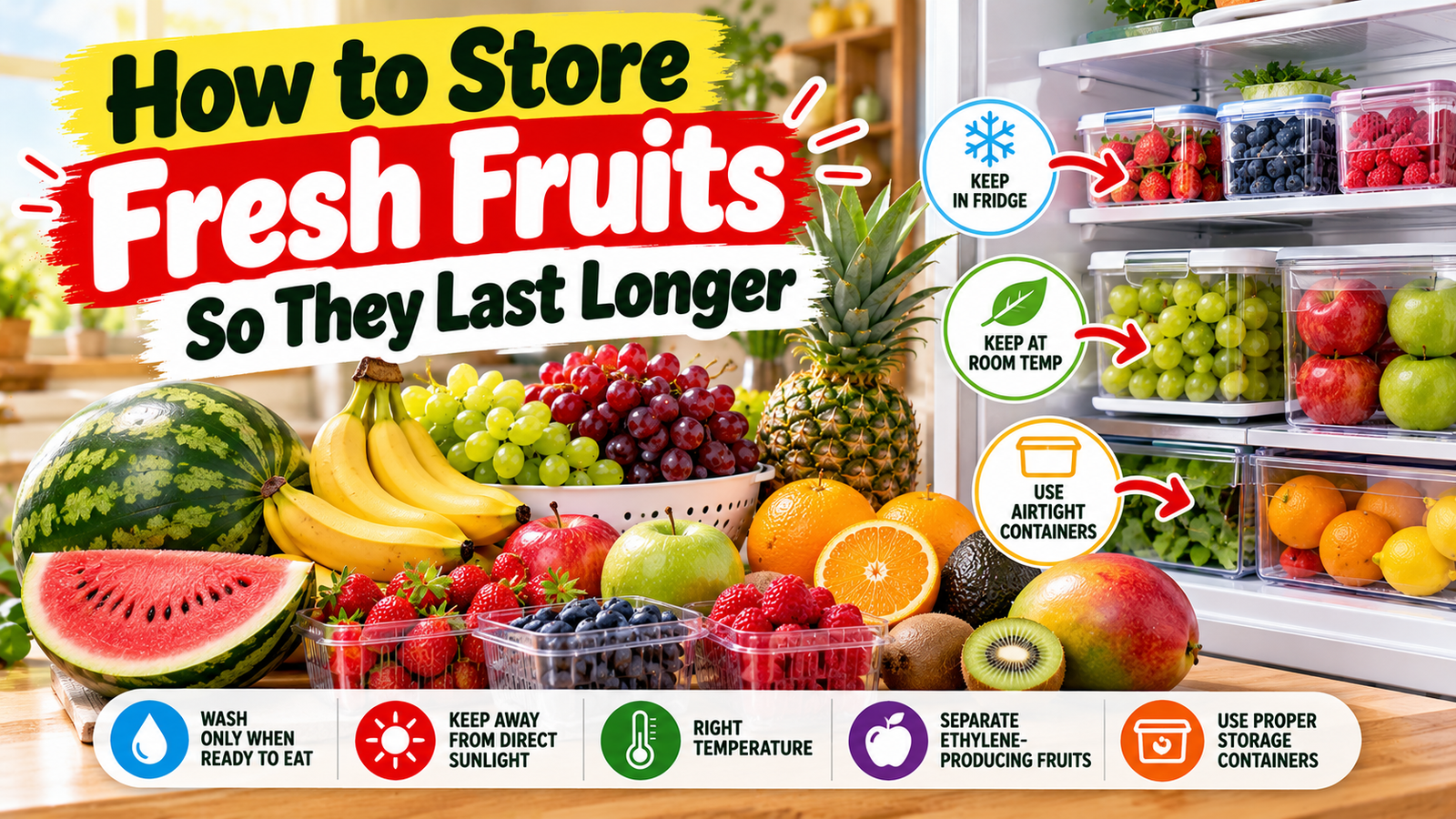
Fresh fruits are one of the easiest foods to enjoy at home, but keeping them fresh for several days can sometimes be a challenge. In my opinion, buying good quality fruit is only the first step. How you store fresh fruits after bringing them home can make a big difference in their taste, texture, freshness, and overall quality.
Some fruits can stay fresh at room temperature, while others last much longer in the refrigerator. Certain fruits should be kept away from other produce because they release natural gases that can speed up ripening. Understanding these simple differences can help reduce food waste and save money.
In this guide, I will explain how to store fresh fruits properly, which fruits should be refrigerated, how to prepare fruit for storage, and some simple mistakes to avoid.
Choose Fresh Fruits When Shopping
The storage process actually starts when you buy your fruit. I always try to choose fruits that look fresh, feel appropriate for their type, and do not have serious bruises or damaged areas.
Avoid fruit that has soft, leaking, moldy, or badly damaged sections unless you plan to use it immediately. Damaged fruit can deteriorate quickly and may affect nearby produce.
If you are not planning to eat the fruit soon, choosing fruit that is slightly less ripe can sometimes give you more time to enjoy it.
Try not to buy much more fruit than you can reasonably use. Even with excellent storage, fresh produce has a limited shelf life.
Wash Fruits at the Right Time
One simple way to help fresh fruits last longer is to avoid washing every fruit immediately after bringing it home.
Extra moisture can encourage mold growth on some fruits. For this reason, it is often better to wash fruit shortly before eating it.
However, if you prefer washing fruit in advance for convenience, make sure it is dried thoroughly before storage and use a clean container.
Fruits with visible dirt can be handled according to their type, but avoid storing wet produce for long periods when moisture can become trapped around the fruit.
Store Apples Properly
Apples can usually be stored in the refrigerator for longer freshness. Keeping them chilled can help slow down their ripening process.
Place apples in a refrigerator drawer or suitable storage bag or container. Avoid sealing them in a completely airtight container if moisture tends to collect inside.
Apples can release ethylene, a natural ripening gas, so it is a good idea to keep them away from fruits that are sensitive to this gas.
If you plan to eat apples within a short period, they can also be kept at room temperature in a cool area away from direct sunlight.
Keep Bananas at Room Temperature
Bananas generally do well at room temperature while they are ripening. Refrigerating unripe bananas can affect their peel and may interfere with normal ripening.
Keep bananas in a dry area away from direct sunlight and excessive heat.
Once bananas become fully ripe, you can move them to the refrigerator if you want to slow further ripening. The peel may darken in the refrigerator, but the inside can remain usable.
If you have more ripe bananas than you can eat, peeling and freezing them can be a useful option for smoothies and homemade recipes.
Store Berries Carefully
Strawberries, blueberries, raspberries, and blackberries can spoil quickly, so proper storage is particularly important.
Keep berries refrigerated and avoid washing them until you are ready to eat them.
Before storing, remove berries that are moldy or badly damaged. One spoiled berry can affect others in the same container.
Use a container that allows some airflow and avoid crushing the berries under heavy items.
For longer storage, berries can also be frozen. Spread them out so they freeze individually before transferring them to a suitable freezer container.
Store Citrus Fruits
Oranges, lemons, limes, and similar citrus fruits can often be stored at room temperature for a short period.
If you want them to last longer, refrigeration is generally a better option. Keep them in a suitable refrigerator drawer or container where they have some airflow.
Avoid storing damaged citrus fruits with healthy ones. Check the fruit regularly and remove any pieces that develop mold or soft spots.
Citrus fruits can remain useful for cooking, drinks, and other recipes even when they are no longer at their best for eating directly.
Store Grapes in the Refrigerator
Grapes generally last longer when refrigerated. Keep them in their original ventilated packaging when possible.
Avoid washing the entire bunch before storage because excess moisture can encourage deterioration.
When you are ready to eat the grapes, wash the amount you need under clean running water and dry them gently.
Remove damaged or leaking grapes from the bunch so they do not affect nearby fruit.
Store Mangoes Correctly
Mangoes are usually best kept at room temperature while they are still unripe. Place them in a cool area away from direct sunlight.
Once mangoes become ripe, you can refrigerate them to slow further softening.
If you have cut mango, place the pieces in a clean, covered container and refrigerate them promptly.
For long term storage, ripe mango pieces can also be frozen and used later in smoothies, desserts, or other recipes.
Store Watermelon and Melons
Whole watermelons and many other melons can be stored at room temperature for a limited period if they are not yet cut.
Once a melon is cut, refrigerate it promptly. Store cut pieces in a clean, covered container.
Use clean utensils when cutting melons to reduce the chance of transferring dirt and microorganisms from surfaces to the edible flesh.
Because cut melon contains plenty of moisture, it generally does not stay fresh as long as an intact fruit.
Keep Pears and Peaches Separate
Pears and peaches can continue ripening after they are picked. If they are still firm, they can usually be kept at room temperature until they reach the desired ripeness.
Once ripe, refrigeration can help slow further softening.
Keep them away from direct sunlight and excessive heat. Check them regularly because soft spots can develop quickly as the fruit becomes ripe.
If one piece becomes badly damaged, remove it from the storage area to protect the quality of nearby fruit.
Store Avocados Carefully
Avocados are another fruit that can continue ripening at room temperature.
Keep unripe avocados on the counter until they become ready to eat. Once ripe, placing them in the refrigerator can slow the ripening process.
Cut avocado should be stored in a clean, covered container and refrigerated.
Because the exposed flesh can darken after cutting, it is best to use cut avocado relatively soon.
Keep Fruit Away From Direct Sunlight
Direct sunlight and excessive heat can speed up the deterioration of many fruits.
A cool, dry, well ventilated area is usually better for fruits that are suitable for room temperature storage.
Do not leave fruit near ovens, cooking appliances, or areas that become very hot during the day.
If your kitchen becomes warm, consider moving suitable fruits to a cooler area or refrigerator.
Use the Refrigerator Wisely
The refrigerator is useful for extending the freshness of many fruits, but not every fruit needs immediate refrigeration.
Use refrigerator drawers where possible and avoid overcrowding them. Good airflow can help reduce excess moisture.
Keep fruits away from foods that have strong odors if the fruit can absorb smells easily.
Check stored fruit regularly. Refrigeration can slow deterioration, but it does not stop it completely.
Store Cut Fruits Carefully
Once fruit has been cut, its storage requirements change. Cut fruit should generally be placed in a clean, covered container and refrigerated.
Use clean knives, cutting boards, and hands when preparing fruit.
Do not leave cut fruit at room temperature for extended periods. If it has been left out too long or shows signs of spoilage, it is safer to discard it.
For convenience, you can prepare small portions of fruit and store them in individual containers for quick snacks.
Freeze Fruits for Longer Storage
Freezing is one of my favorite ways to preserve fruits that I cannot eat quickly enough.
Many fruits can be frozen after being washed, dried, peeled, or cut as appropriate. Remove seeds, stems, or pits where necessary.
Spread prepared fruit in a single layer on a tray and freeze it before transferring it to a suitable freezer container. This can help prevent pieces from sticking together.
Frozen fruit can be useful for smoothies, desserts, sauces, and homemade drinks.
Remember that freezing can change the texture of some fruits after they thaw, so frozen fruit is often best used in recipes rather than eaten in exactly the same way as fresh fruit.
Check Your Fruit Regularly
One of the easiest ways to prevent food waste is to inspect stored fruit regularly.
Look for mold, leaking juice, unusual softness, unpleasant smells, or significant discoloration.
Use ripe fruits first and move newer produce into the storage area as needed. This simple habit can help you avoid forgetting about fruit until it becomes spoiled.
I personally find that organizing fruit based on how quickly it needs to be used makes everyday storage much easier.
Common Fruit Storage Mistakes
One common mistake is washing every fruit immediately and storing it while it is still wet. Excess moisture can encourage spoilage.
Another mistake is putting every type of fruit into the refrigerator without considering its ripening needs.
Keeping ripe and unripe fruits together can also cause problems because some fruits release natural ripening gases that can speed up the ripening of nearby produce.
Overcrowding storage containers is another issue. Fruits can become bruised when they are pressed together or placed under heavy items.
Finally, ignoring damaged fruit can allow mold and spoilage to spread to other pieces.
Final Thoughts
Learning how to store fresh fruits so they last longer does not require complicated equipment. Small changes in how you wash, organize, refrigerate, and check your fruit can make a noticeable difference.
In my view, the most important habit is to understand that different fruits have different storage needs. Bananas, apples, berries, citrus fruits, mangoes, grapes, and melons should not all be treated exactly the same way.
Keep fruits away from excessive heat, use refrigeration when appropriate, store cut fruit safely, and freeze extra fruit when necessary. With these simple habits, you can enjoy fresher fruit for longer, reduce unnecessary food waste, and get better value from every grocery trip.