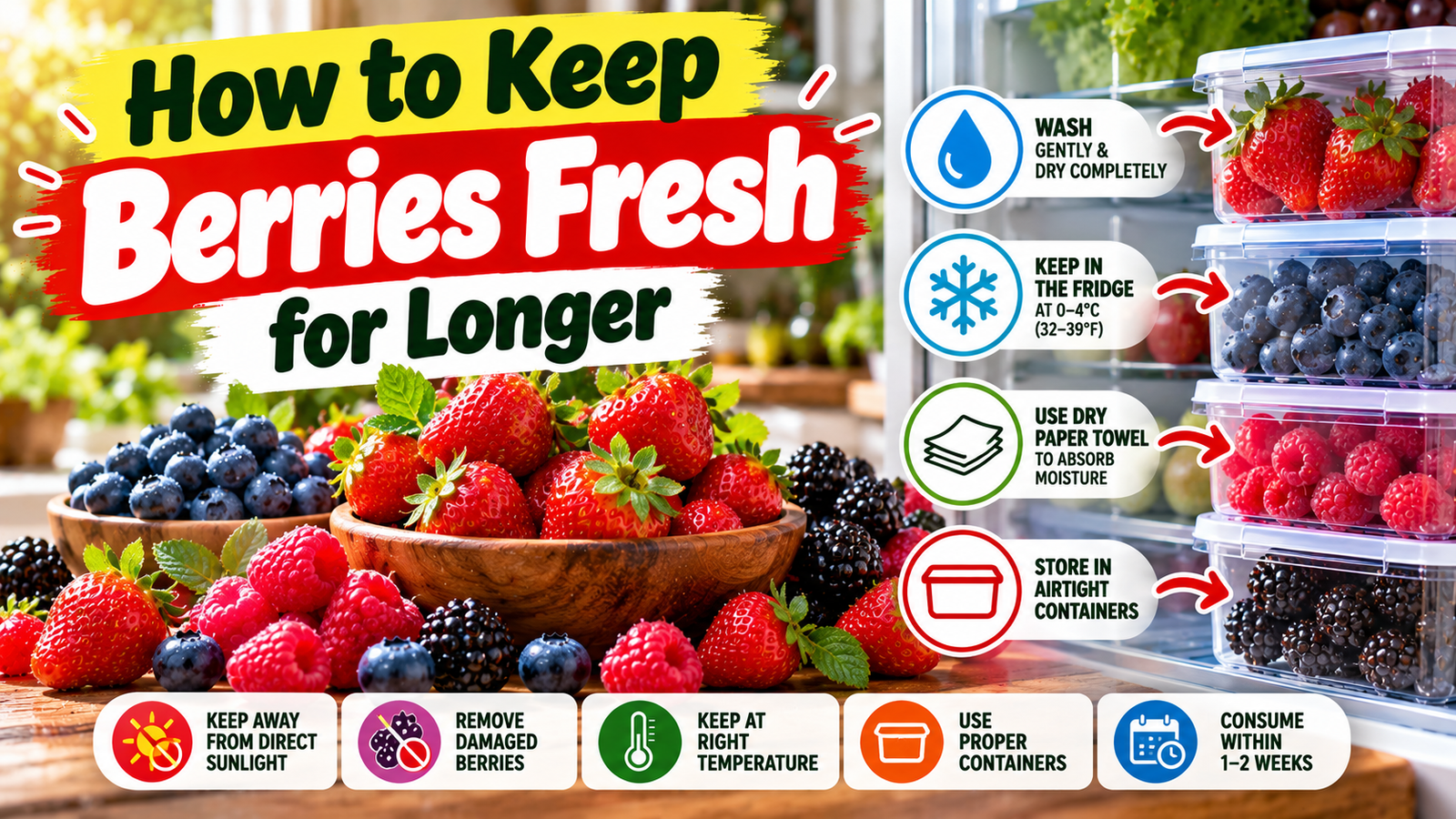
Berries are among my favorite fruits to keep at home because they are convenient, flavorful, and easy to add to breakfast, desserts, smoothies, and snacks. The only problem is that fresh berries can spoil much faster than many other fruits. Strawberries, blueberries, raspberries, and blackberries can develop mold or become soft within a short time if they are stored incorrectly.
In my experience, keeping berries fresh for longer is mostly about controlling moisture, preventing bruising, and storing them at the right temperature. You do not need complicated equipment to improve their shelf life. A few simple habits can make a noticeable difference.
In this guide, I will explain how to store berries properly, when to wash them, how to prevent mold, and how to freeze berries when you cannot use them quickly.
Choose Fresh Berries
The best way to keep berries fresh for longer is to start with good quality fruit. When shopping, look closely at the container before buying it.
Avoid berries that already have visible mold, excessive moisture, leaking juice, or many crushed pieces. One moldy berry can quickly affect nearby berries.
Strawberries should look firm and brightly colored, while blueberries should generally be firm and free from excessive wrinkles. Raspberries and blackberries are naturally delicate, so check them carefully for crushed or leaking pieces.
If possible, buy an amount that you can reasonably use within a few days. Buying too many berries at once can make storage more difficult.
Do Not Wash Berries Immediately
One of the simplest tips for keeping berries fresh is to avoid washing them immediately after bringing them home.
Extra moisture can encourage mold growth, especially on delicate berries such as raspberries and blackberries.
Instead, keep the berries dry and wash only the amount you plan to eat. When you are ready to use them, rinse them gently under clean running water.
If you prefer washing berries in advance for convenience, make sure they are dried thoroughly before placing them in the refrigerator.
Remove Damaged Berries
Before storing your berries, inspect the container carefully. Remove any berries that are moldy, badly damaged, leaking, or extremely soft.
This step is particularly important because mold can spread quickly between berries that are touching each other.
Do not simply wipe mold from a berry and put it back with the others. If a berry has visible mold, it is better to discard it.
Removing damaged fruit early can help protect the remaining berries and reduce unnecessary food waste.
Keep Berries Refrigerated
Most fresh berries should be refrigerated as soon as possible after bringing them home.
A refrigerator helps slow the natural deterioration process and can extend the usable life of the fruit.
Place berries in a refrigerator area where they will not be crushed by heavier foods. Avoid placing heavy containers on top of delicate berries.
The temperature should be consistently cold, but avoid freezing fresh berries unless you are intentionally preserving them for later use.
Use a Ventilated Container
Berries generally benefit from some airflow. Keeping them in a container with ventilation can help excess moisture escape.
Many berries are sold in containers designed with small openings for airflow. If the original container is clean and undamaged, it can often be used for storage.
Avoid completely sealing fresh berries in an airtight container when moisture is trapped inside. Condensation can encourage mold growth.
If you use another storage container, choose one that provides enough room for the berries and allows some ventilation.
Store Strawberries Correctly
Strawberries can stay fresh longer when they are kept dry and refrigerated.
Do not remove the green tops until you are ready to eat or prepare the strawberries. Keeping the fruit intact can help reduce moisture exposure.
Store strawberries in a breathable container rather than tightly packing them into a sealed container.
Check them every day or two and remove any fruit that becomes soft or moldy.
If strawberries are already very ripe, use them soon or freeze them for later recipes.
Keep Blueberries Dry
Blueberries are generally a little more durable than raspberries and blackberries, but they can still spoil when exposed to excess moisture.
Keep them refrigerated and avoid washing them until you are ready to eat them.
If you notice damaged berries, remove them from the container. Keep the remaining blueberries as dry as possible.
When you wash blueberries, rinse only the amount you plan to use and dry them gently if you are not eating them immediately.
Handle Raspberries Carefully
Raspberries are especially delicate. They can become crushed or moldy quickly if they are handled roughly or stored under pressure.
Place raspberries in a shallow container and avoid stacking heavy food on top of them.
Do not pack them tightly. A little space between the berries can reduce crushing and allow better airflow.
Because raspberries are so delicate, I recommend using them earlier than harder berries whenever possible.
Store Blackberries With Care
Blackberries also need careful handling because their soft structure can be damaged easily.
Keep them refrigerated in a ventilated container and avoid washing them until you are ready to eat them.
Check for soft or leaking berries regularly. Remove damaged fruit promptly.
Try not to move the berries around unnecessarily. Excessive handling can cause bruising and speed up deterioration.
Keep Berries Away From Excess Moisture
Moisture is one of the biggest enemies of fresh berries.
If water collects inside the storage container, carefully remove the berries and dry the container before returning them.
Do not place wet berries directly into the refrigerator and expect them to stay fresh for long.
If you wash berries before storage, use a clean towel or suitable method to remove excess surface moisture. Be gentle because rough handling can damage the fruit.
Use Paper Towels Carefully
A clean paper towel can sometimes help absorb excess moisture in a berry storage container.
Place a dry paper towel underneath or around the berries without tightly wrapping the fruit.
If the towel becomes damp, replace it with a fresh, dry one.
This method can be particularly useful when condensation develops inside the container, but it should not replace proper refrigeration and airflow.
Avoid Crushing the Berries
Berries are delicate fruits, so physical damage can shorten their shelf life.
Do not pile heavy food on top of berry containers. Keep them in an area of the refrigerator where they will not be squeezed or knocked around.
When transporting berries from the grocery store, place them carefully and avoid carrying them under heavy bags.
Small bruises can become soft spots and may eventually lead to mold.
Freeze Berries for Long Term Storage
If you have more berries than you can eat soon, freezing is one of the easiest ways to preserve them.
First, remove damaged berries and prepare the remaining fruit according to its type. Wash them gently and allow them to dry thoroughly.
Spread the berries in a single layer on a tray and place them in the freezer. Once frozen, transfer them to a suitable freezer safe container or bag.
Freezing berries individually first can help prevent them from forming one large frozen block.
Frozen berries are excellent for smoothies, sauces, baked foods, desserts, and other recipes.
Keep in mind that freezing can change the texture of berries after thawing. They may become softer than fresh berries, but they can still be very useful for cooking and blending.
Use Ripe Berries First
A simple organization habit can make a big difference. When you bring home new berries, check the older containers first.
Use the berries that are softer or more mature before the firmer ones.
If some berries are approaching the end of their freshness, use them in smoothies, oatmeal, yogurt, desserts, or homemade sauces.
This approach can help reduce food waste and ensure that you enjoy your berries while they still taste good.
Prepare Berries Safely
When you are ready to eat your berries, wash them gently under clean running water.
Avoid using soap or household cleaning products on fruit.
Wash your hands and use clean utensils and containers when preparing berries.
If berries have been cut or prepared for a meal, keep them refrigerated and avoid leaving them at room temperature for extended periods.
Good food handling practices are just as important as proper storage.
Common Mistakes to Avoid
One common mistake is washing berries and putting them into storage while they are still wet. Excess moisture can encourage mold.
Another mistake is keeping moldy berries with healthy ones. Remove damaged fruit as soon as you notice it.
Storing berries in completely sealed containers can also trap moisture and condensation.
Overcrowding is another problem. Berries can become crushed when too many are packed into a small container.
Finally, leaving berries at room temperature for too long can speed up deterioration, particularly in warm weather.
Final Thoughts
Learning how to keep berries fresh for longer is mostly about controlling moisture, temperature, and handling. Start with fresh berries, keep them dry, refrigerate them properly, and remove damaged fruit as soon as you notice it.
In my opinion, one of the most useful habits is simply checking berries regularly. A quick inspection can help you remove one spoiled berry before it affects the rest of the container.
If you cannot eat your berries within a few days, freezing them is an excellent way to preserve them for smoothies, desserts, and homemade recipes. With these simple storage habits, you can enjoy fresh berries for longer while reducing food waste and getting more value from every purchase.