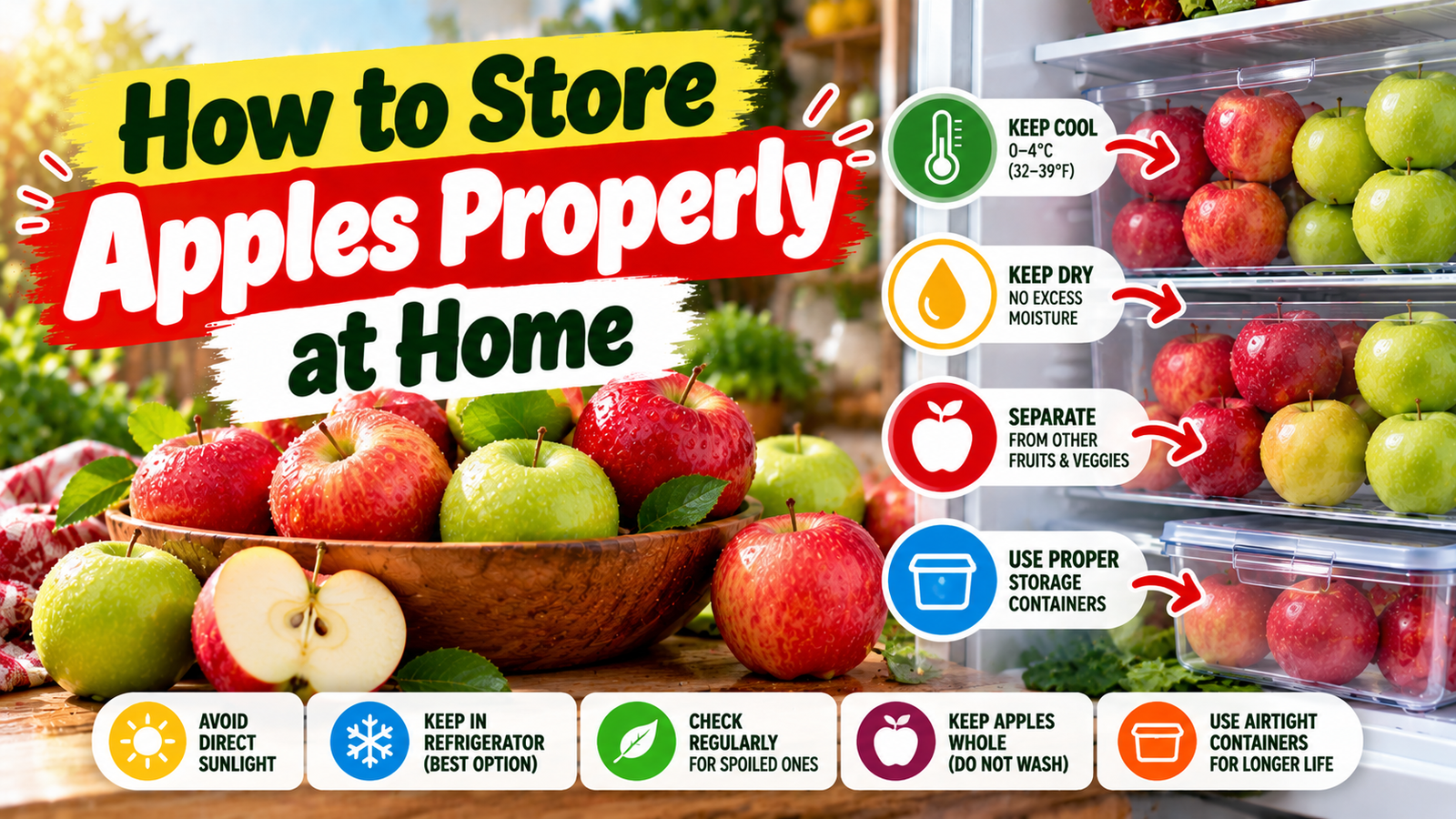
Apples are one of the easiest fruits to keep at home, but proper storage can make a big difference in how long they stay crisp, fresh, and enjoyable. In my opinion, there is no reason to let a good bag of apples spoil quickly when a few simple storage habits can help them last much longer.
The key to storing apples properly is controlling temperature, moisture, airflow, and contact with other fruits. Apples can be kept at room temperature for a short period, but refrigeration is generally better when you want to extend their freshness. It is also important to check apples regularly and remove damaged fruit before it affects others.
In this guide, I will explain how to store apples properly at home, where to keep them, how to prepare them for storage, and which common mistakes you should avoid.
Choose Fresh Apples for Storage
Proper apple storage begins at the grocery store or market. When choosing apples, look for fruit that feels firm and has healthy skin without large bruises, cuts, or soft areas.
Avoid apples that are already leaking, badly damaged, or showing signs of mold. Damaged fruit usually deteriorates faster and can affect nearby apples.
If you plan to store apples for several weeks, choosing firm and fresh apples is especially important.
Different apple varieties also have different storage qualities. Some varieties naturally keep their texture longer than others, so consider the variety when planning long term storage.
Check Apples Before Storing Them
Before placing apples into storage, inspect each one carefully.
You do not necessarily need to wash apples before storing them. In fact, keeping them dry can help reduce moisture related spoilage.
Remove any apple with significant damage, mold, or very soft areas. If one apple is already deteriorating, keeping it beside healthy apples may increase the chance of problems spreading.
You can set very ripe apples aside and use them first while keeping firmer apples for later.
Store Apples in the Refrigerator
The refrigerator is generally one of the best places to store apples when you want them to remain fresh for longer.
A cool environment slows the natural ripening process and helps apples maintain their texture.
Place apples in a refrigerator drawer or another suitable area where they will not be crushed by heavier foods.
Avoid storing apples where they are constantly exposed to excessive moisture. If condensation develops inside a storage bag or container, allow appropriate airflow and remove excess moisture.
Use a Suitable Storage Bag or Container
You can store apples in a refrigerator drawer, perforated storage bag, or suitable container that allows some airflow.
Avoid completely sealing wet apples in an airtight container. Trapped moisture can encourage mold.
If you use a plastic bag, small openings can allow excess moisture to escape.
You can also place apples in a clean container lined with a dry paper towel if moisture tends to collect. Check the towel regularly and replace it if it becomes damp.
The goal is to create a cool and reasonably dry storage environment.
Keep Apples Away From Strong Odors
Apples can absorb odors from some foods stored nearby. For this reason, it is a good idea to keep them away from strongly scented foods whenever possible.
Using the refrigerator’s fruit and vegetable drawer can help keep apples separated from foods with strong smells.
A clean storage area also makes it easier to inspect the apples regularly.
Keep Apples Away From Certain Fruits
Apples release ethylene, a natural gas that influences ripening. Because of this, storing apples next to certain fruits and vegetables can speed up their ripening.
If you want to extend the freshness of other produce, it can be helpful to keep apples separated from fruits that are sensitive to ethylene.
This does not mean apples must always be completely isolated. It simply means that thoughtful storage can help slow unwanted ripening.
Keeping different types of produce in separate refrigerator drawers or containers can be useful.
Store Apples at Room Temperature
If you plan to eat your apples within a few days, storing them at room temperature can be perfectly practical.
Choose a cool, dry location away from direct sunlight. Avoid placing apples near ovens, stoves, or other sources of heat.
A fruit bowl can work well for short term storage, especially when the apples are going to be eaten quickly.
However, avoid filling the bowl with too many apples if you will not use them soon. Apples at room temperature generally ripen faster than refrigerated apples.
Keep Apples Dry
Moisture is an important factor in fruit storage. Before storing apples, make sure they are reasonably dry.
If you wash apples, dry them thoroughly before putting them into a storage container.
You can wash apples just before eating them instead of washing the entire batch immediately after purchase.
If moisture collects inside the storage area, wipe it away and improve airflow.
Keeping apples dry does not mean allowing them to become dehydrated. The goal is simply to avoid unnecessary surface moisture.
Avoid Bruising the Apples
Apples may look tough, but bruising can shorten their storage life.
Handle them carefully when placing them into containers, bags, or refrigerator drawers.
Avoid throwing apples into a storage container. Instead, place them gently.
Do not stack heavy foods on top of them.
If you notice an apple with a small bruise, consider using it sooner rather than later. Cutting away a minor damaged area and using the remaining good portion may be appropriate if the fruit is otherwise sound.
Check Stored Apples Regularly
One of the easiest ways to keep apples fresh is to inspect them regularly.
Every few days, check for soft areas, mold, leaking juice, or unusual odors.
Remove damaged apples promptly so they do not remain in contact with healthy fruit.
You can also reorganize the storage area by placing the ripest apples where they are easiest to see. This encourages you to use them first.
I personally find that a quick inspection takes very little time and can prevent a lot of unnecessary food waste.
Store Cut Apples Properly
Once an apple has been cut, its storage needs change.
Cut apples should be placed in a clean, covered container and refrigerated.
Apple flesh naturally becomes brown after exposure to air. This does not necessarily mean the apple is spoiled, but the appearance and flavor can change over time.
For best quality, use cut apples relatively soon.
If you are preparing apples for lunch, snacks, or recipes, keep them chilled until they are ready to eat.
Freeze Apples for Longer Storage
If you have more apples than you can use, freezing is another option.
Wash, peel, and cut the apples according to how you plan to use them later. Remove the core and seeds.
You can freeze apple slices for use in cooked dishes, baked recipes, smoothies, sauces, and other foods.
Spread the prepared pieces on a tray first so they freeze separately. Once frozen, transfer them to a suitable freezer container or bag.
Remember that freezing changes the texture of apples. They may become softer after thawing, so frozen apples are often better suited to cooking and baking rather than eating raw.
Store Apples for Cooking
Sometimes apples become too soft for eating fresh but are still perfectly useful for cooking.
Instead of throwing them away immediately, check whether they are still sound and free from mold or significant spoilage.
Soft apples can be used in homemade applesauce, baked dishes, smoothies, desserts, and other recipes.
This is a simple way to reduce food waste and make better use of fruit that is past its ideal crispness.
Common Apple Storage Mistakes
One common mistake is keeping apples in a warm location for too long. Heat can speed up ripening and reduce freshness.
Another mistake is storing wet apples in a tightly sealed container. Trapped moisture can encourage mold.
Placing apples under heavy foods can also cause bruising.
Ignoring damaged apples is another problem. A single spoiled apple can affect nearby fruit, so regular inspection is useful.
Finally, storing apples together with every type of fruit without considering ripening behavior can cause some produce to mature faster than expected.
Final Thoughts
Learning how to store apples properly at home is simple once you understand the basic principles. Keep apples cool, protect them from bruising, control moisture, and check them regularly.
For short term storage, a cool area away from direct sunlight can work well. If you want apples to stay fresh for longer, refrigeration is generally a better choice.
In my opinion, the most important habit is to inspect your apples every few days. Remove damaged fruit, use the ripest apples first, and store the remaining apples in a cool environment.
With these simple methods, you can keep apples crisp and enjoyable for longer, reduce food waste, and get more value from every purchase.