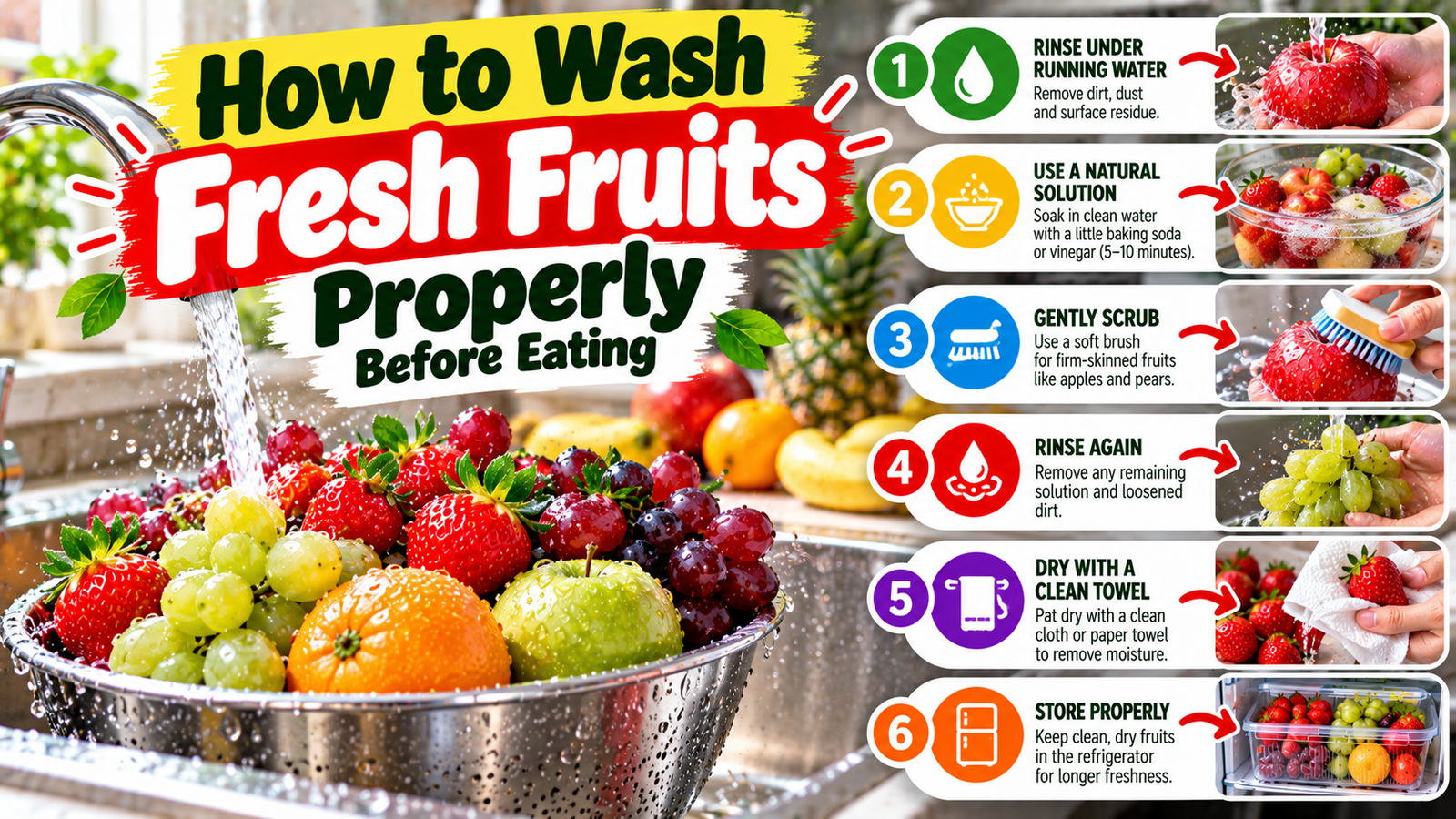
Fresh fruits are an important part of a healthy diet, but I believe that proper washing is just as important as choosing good quality fruit. Fruits can collect dirt, dust, and other unwanted substances during growing, harvesting, transportation, and handling. Even fruits with thick or removable peels should be handled carefully before eating or cutting.
In my experience, washing fresh fruits properly does not have to be complicated. You usually do not need expensive fruit cleaning products. Clean running water, clean hands, and a little care are enough for most fruits. The important thing is to wash fruits at the right time and handle them properly after washing.
In this article, I will explain how to wash fresh fruits properly before eating and share simple fruit washing tips that can easily become part of your daily routine.
Wash Your Hands First
Before washing fruit, start with clean hands. This is one of the simplest steps, but it is easy to overlook.
Wash your hands thoroughly with soap and clean running water before handling fresh produce. This helps prevent dirt and germs from your hands from transferring to the fruit.
I also recommend washing your hands after handling raw foods or other items that may contaminate your hands before preparing fruit.
Clean hands provide a better starting point for the entire fruit washing process.
Use Clean Running Water
For most fresh fruits, clean running water is the main thing you need.
Place the fruit under cool or clean running water and gently rub the surface with your hands. This can help remove dirt and other material from the surface.
You do not need to use soap or household cleaning products on fruit. These products are not designed for eating and can leave unwanted residues.
The goal is to clean the surface without damaging the fruit.
Wash Fruits Before Cutting Them
One important habit I recommend is washing fruits before cutting or peeling them.
Even when you plan to remove the peel, the outside of the fruit can come into contact with your knife and hands. If the surface is dirty, cutting through it can transfer contaminants toward the edible portion.
For example, wash melons, mangoes, oranges, lemons, and other fruits before slicing or peeling them.
This simple step can make fruit preparation cleaner and safer.
Do Not Use Soap on Fresh Fruits
It may seem reasonable to use soap to clean fruit, but this is not recommended.
Soap and household detergents are designed for cleaning surfaces, not for eating. Fruit can absorb or retain residues, and these products may also affect the taste.
For normal household fruit washing, clean running water is the better choice.
You also do not need bleach, disinfectants, or other household chemicals to wash fruit.
Gently Rub Firm Fruits
Firm fruits such as apples, pears, peaches, plums, and similar produce can be gently rubbed under running water.
Use your fingers to clean the entire surface. Pay attention to areas around the stem and natural crevices where dirt may collect.
There is no need to scrub aggressively because rough handling can damage the skin and create bruised areas.
A gentle but thorough wash is usually the best approach.
Wash Berries Carefully
Berries need a little extra care because they are delicate.
Strawberries, raspberries, blackberries, and blueberries can become damaged if handled roughly. Place them under clean running water and gently rinse them.
Avoid crushing or squeezing the fruit. Excessive water exposure can also affect delicate berries, so wash them close to the time you plan to eat them.
For strawberries, rinse the fruit before removing the leafy top. This can help prevent water from entering the fruit through the cut surface.
Clean Melons Before Cutting
Melons such as watermelon, cantaloupe, and honeydew should be washed before cutting.
Their thick skin may look clean, but dirt and microorganisms can still be present on the outside.
Rinse the whole melon under clean running water and gently rub the surface. After washing, dry the melon with a clean towel before cutting it.
Once the knife touches the outside skin and then enters the flesh, anything on the surface can potentially be transferred inside. That is why washing melons before cutting is a useful habit.
Wash Citrus Fruits Before Peeling or Cutting
Oranges, lemons, limes, and other citrus fruits should also be rinsed before peeling or cutting.
Even though the peel is usually removed, your hands and knife come into contact with it during preparation.
Gently rub the surface under running water and dry the fruit if necessary.
This is particularly useful when you are using citrus zest because the peel itself will be part of your recipe.
Wash Grapes Properly
Grapes can collect dust and other material between the individual fruits.
Place the grapes in a clean colander and rinse them thoroughly under running water. Gently move them around so the water can reach different areas.
Try not to squeeze the grapes because they can bruise easily.
If you are not planning to eat the grapes immediately, drying them properly before storage can help reduce excess moisture.
Wash Apples Before Eating
Apples can be rinsed under clean running water and gently rubbed with your hands.
Pay attention to the stem area and the bottom of the fruit because dirt can sometimes collect in these small spaces.
If you prefer eating apples with the skin, washing them carefully is especially important.
After washing, you can dry the apple with a clean towel or eat it while it is still slightly wet.
Wash Mangoes Before Cutting
Mangoes should be washed before peeling or cutting.
Even though you normally remove the skin, the knife can transfer material from the outside surface to the flesh if the fruit has not been cleaned.
Hold the mango under running water and gently rub its surface. After washing, dry it and then peel or cut it using a clean knife and cutting board.
Wash Pineapple Before Cutting
Pineapple has a rough and textured outer surface, so it is easy to assume that washing is unnecessary.
However, it is still a good practice to rinse the whole fruit before cutting it.
Gently wash the outside under clean running water and dry it before placing it on your cutting board.
After cutting, remove the skin and prepare the flesh with clean utensils.
Be Careful With Pre Cut Fruit
Pre cut fruit should be handled differently from whole fruit.
If you buy prepared fruit from a store, check that it has been properly refrigerated and packaged. Follow the storage instructions on the package.
You generally do not need to wash packaged ready to eat fruit again if the label indicates that it is ready to eat. Unnecessary handling can introduce new contamination.
Once opened, keep the fruit refrigerated and use it according to the package instructions.
Dry Fruit Before Storing It
If you plan to refrigerate fruit after washing, drying it can be helpful.
Excess moisture can encourage softening and spoilage, particularly for delicate fruits such as berries.
Use a clean towel or allow the fruit to air dry in a clean area before placing it in the refrigerator.
However, some fruits are best washed shortly before eating rather than washing a large quantity in advance. This can be especially useful for berries and other moisture sensitive fruits.
Keep Your Kitchen Tools Clean
Washing fruit properly is only one part of clean food preparation.
Make sure your knives, cutting boards, bowls, and containers are clean before using them.
A clean fruit can become contaminated again if it is placed on a dirty cutting board or handled with unwashed hands.
I recommend keeping one clean preparation area available whenever you are washing and cutting fresh produce.
Avoid Cross Contamination
Keep fresh fruit away from raw meat, poultry, seafood, and other foods that can contaminate it.
Use clean utensils and cutting boards for fruit preparation. If a surface has been used for raw foods, wash it thoroughly before preparing fruit.
This simple separation can make food preparation much cleaner and easier to manage.
Do Not Wash Fruit Too Far in Advance
Although washing fruit before eating is important, washing everything days in advance is not always the best idea.
Water left on fruit can encourage faster deterioration, especially for berries and other delicate produce.
If you want to prepare fruit ahead of time, choose suitable fruits, dry them properly, and store them in clean containers in the refrigerator.
For very delicate fruits, washing shortly before eating can help maintain better freshness.
Common Fruit Washing Mistakes
There are several mistakes worth avoiding when washing fresh fruits.
Using soap or household cleaning products is unnecessary and can leave unwanted residues. Scrubbing delicate fruit too hard can cause bruising.
Another mistake is washing fruit with dirty hands or using an unclean sink, towel, knife, or cutting board.
Leaving wet fruit in a closed container for a long time can also reduce freshness.
Finally, do not assume that thick skinned fruits do not need washing. Fruits such as melons, mangoes, oranges, and pineapples should still be rinsed before cutting.
Final Thoughts
Learning how to wash fresh fruits properly before eating is a simple habit that can make fruit preparation cleaner and safer. In my opinion, the most important steps are washing your hands, using clean running water, gently rubbing the fruit, and washing fruits before cutting them.
Avoid using soap, detergents, bleach, or household cleaning chemicals on fresh fruit. Handle delicate fruits carefully and pay extra attention to fruits with textured skins.
It is also important to keep knives, cutting boards, containers, and kitchen surfaces clean. Proper storage after washing can help maintain freshness and reduce unnecessary food waste.
With a few simple habits, washing fresh fruits can become a quick and natural part of your everyday routine. Clean preparation allows you to enjoy your favorite fruits with greater confidence while maintaining their fresh taste and texture.